

By James Harper, Chronicles of History · Last updated November 2026
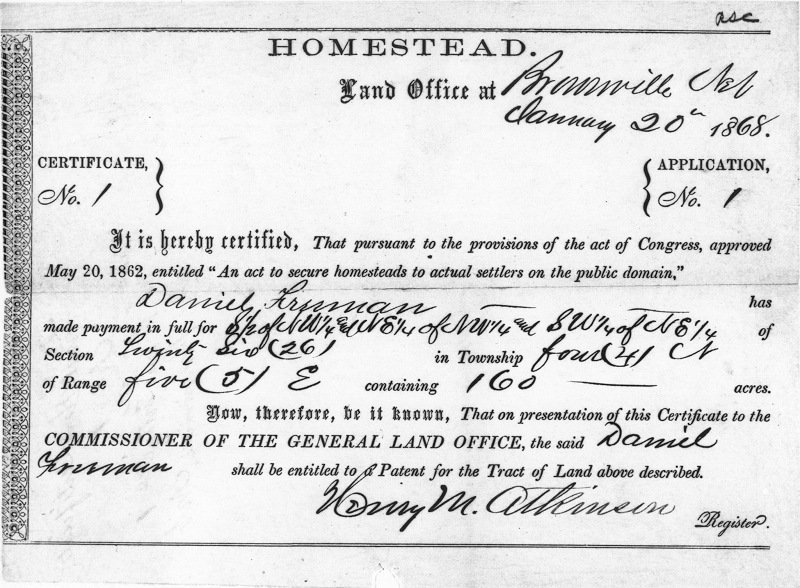
Daniel Freeman had a problem on New Year's Eve, 1862. He was a Union Army scout, and he was due to leave Gage County, Nebraska Territory, to report for duty in St. Louis. The new homestead law didn't take effect until January 1, 1863. Wait for the land office to open in the morning, and he'd miss his chance.
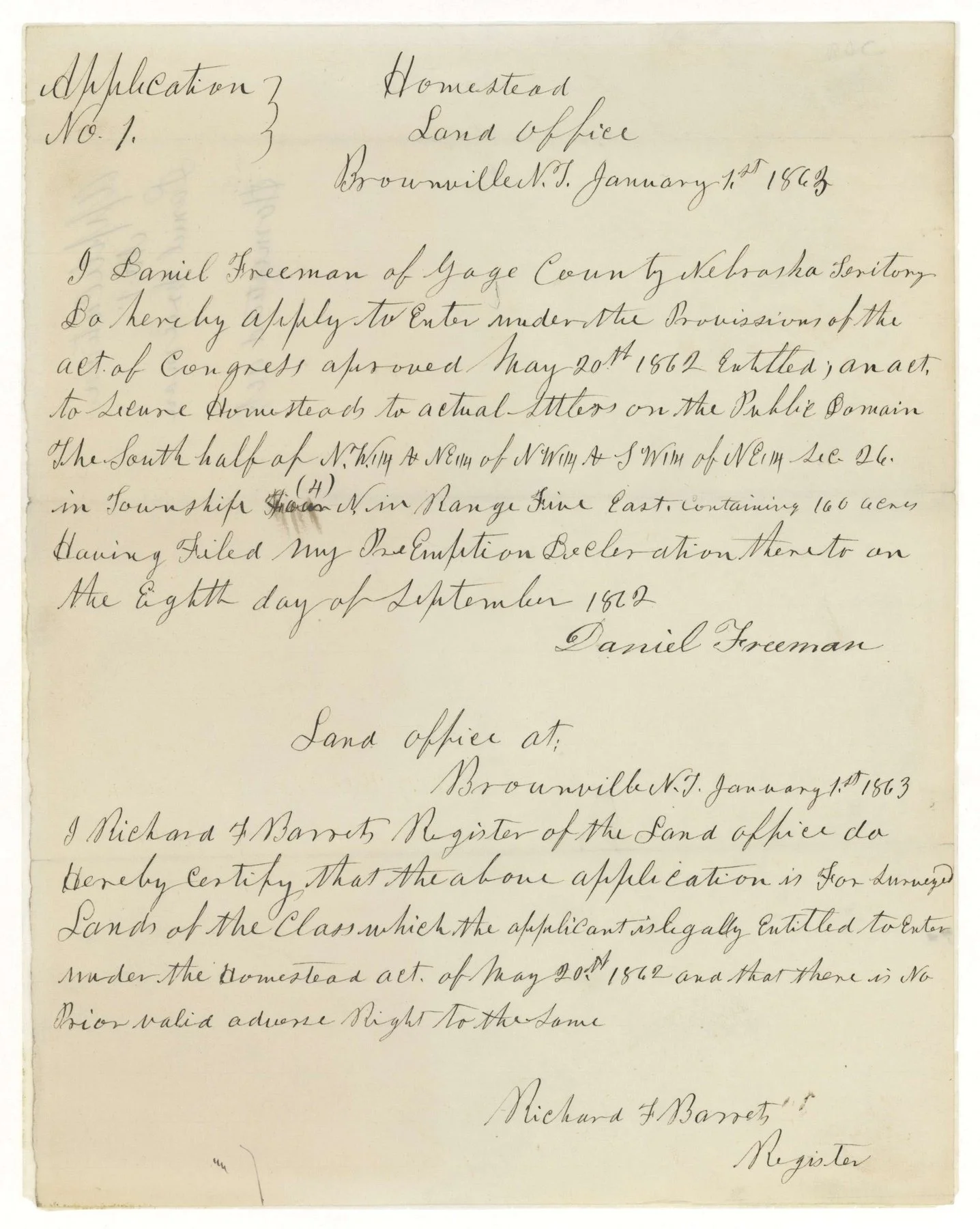
So at a New Year's Eve party he found some land office officials and talked a clerk into opening the office shortly after midnight. Freeman filed his claim at the Brownville land office in the first minutes of 1863. By the end of that day, the National Archives counts, he and 417 others had filed.
Freeman kept his land. In 1936 the Department of the Interior recognized him as the first claimant and made his homestead near Beatrice, Nebraska, a national monument. Today it's Homestead National Historical Park.
That's the clean version. The full story has more dirt in it. Some of it literally.
The Homestead Act of 1862 let any adult citizen, or immigrant who had filed to become one, claim 160 acres of surveyed federal land for a $10 filing fee plus small land office charges. After five years of living on it, farming it and building a home, the settler "proved up" and got the deed.
Key Facts: The Homestead Act of 1862
- Signed: May 20, 1862, by President Abraham Lincoln
- Took effect: January 1, 1863
- Claim size: 160 acres (one quarter section)
- Cost: $10 filing fee, plus land office commissions paid half at filing and half at the end
- Time to own it: 5 years of residence and cultivation, proven by two witnesses
- Shortcut: buy it outright after 6 months at $1.25 an acre
- Total land: about 270 million acres, roughly 10% of the United States (NPS)
- Claims filed: about 4 million, in 30 states (NPS)
- Repealed: 1976, with Alaska allowed until 1986
- Last patent issued: May 5, 1988, to Kenneth Deardorff, Stony River, Alaska
What was the Homestead Act of 1862?
The Homestead Act of 1862 was a federal law, signed by Abraham Lincoln on May 20, 1862, that gave up to 160 acres of surveyed public land to settlers who lived on it and farmed it for five years. It took effect January 1, 1863, and stayed on the books until 1976, with Alaska claims allowed until 1986.
The fight over it took decades. Since the Land Ordinance of 1785, the government had surveyed the West into townships six miles square, each cut into 36 sections of 640 acres. A quarter of a section is 160 acres. That's where the famous number comes from.
For decades Washington sold that land instead of giving it away. In 1800 the smallest lot you could buy was 320 acres, and the price stayed at $1.25 an acre until 1854. For a family with no savings, that was a wall.
The House passed homestead bills in 1852, 1854 and 1859, and the Senate killed all three. In 1860 President James Buchanan vetoed one. Southern lawmakers feared a West full of small farmers who didn't want slavery. Northern factory owners feared their cheap labor would head for Kansas.
Then 11 Southern states left the Union, and the votes were there. Lincoln signed the bill on May 20, 1862.
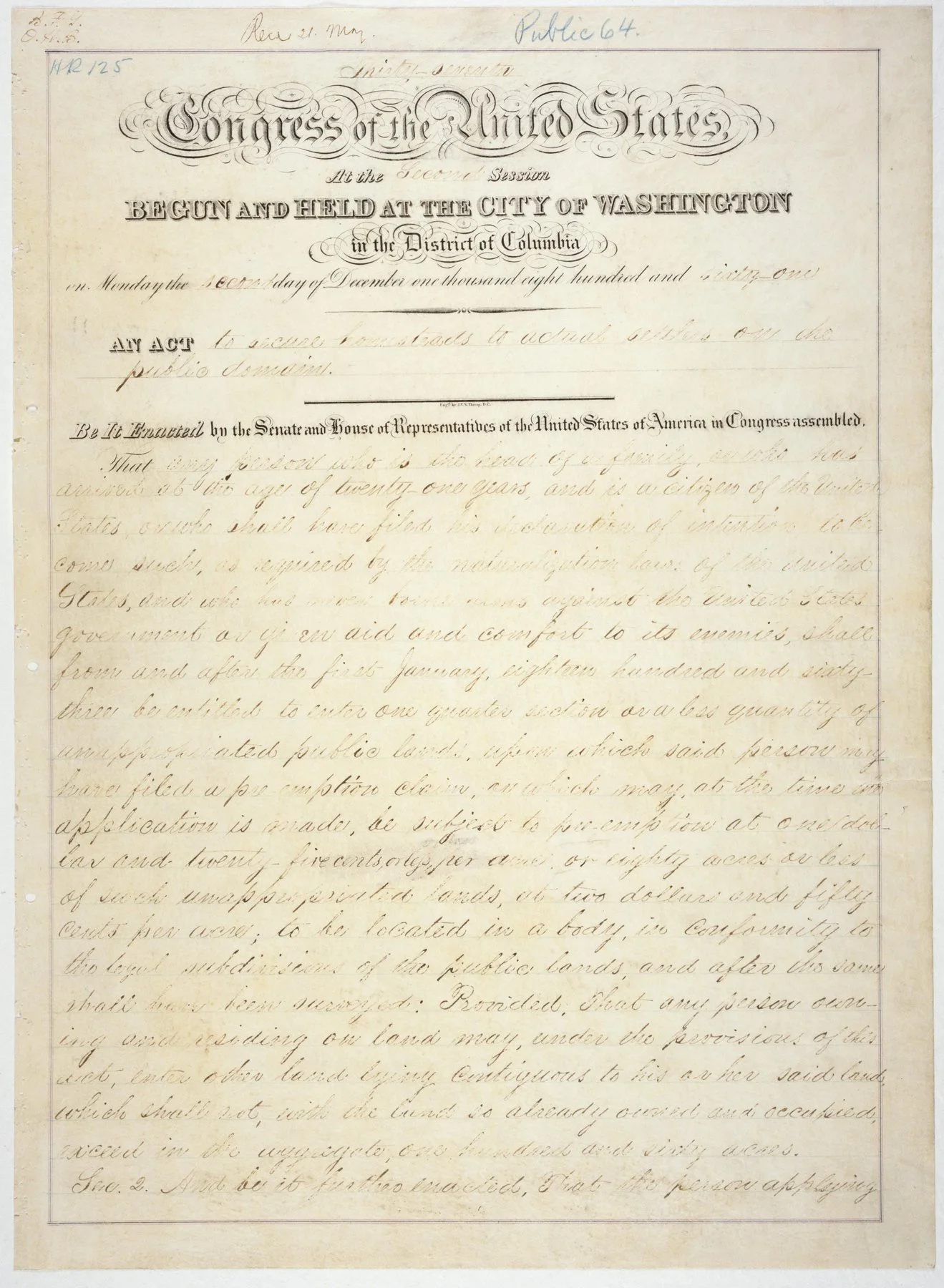
The original text at the National Archives runs eight short sections and is worth five minutes. Section 4 protected the settler: land gained under the act couldn't be seized for debts run up before the deed was issued.
Who could file a homestead claim?
Anyone who was 21 or older, or the head of a family, could file, as long as they were a U.S. citizen or had formally declared their intention to become one, and had never taken up arms against the United States. That opened the door to single women, widows, immigrants and, after the Civil War, formerly enslaved people.
Section 1 shut out anyone who had "borne arms against the United States Government or given aid and comfort to its enemies." In 1862, that meant Confederates.
The law also says "he or she." Those three words let a single woman or a widow file in her own name.
Soldiers got a break. Section 6 said anyone who served at least 14 days in the Army or Navy during a war couldn't be turned away for being under 21. After the war, Union veterans could subtract their time in uniform from the five-year residence requirement.
Immigrants qualified once they filed a "declaration of intention" to become citizens.
Most Native Americans didn't qualify. They weren't U.S. citizens until the Indian Citizenship Act of 1924, so a law that opened so much tribal land wasn't written for them. More on that below.
How did you claim 160 acres?
You picked out an open, surveyed tract, went to the nearest federal land office, swore an affidavit that the land was for your own use and settlement, and paid a $10 filing fee plus a small commission. That bought you the right to start. Ownership still had to be earned.
At the land office, the register checked the tract books to make sure nobody else had the tract, took your affidavit, and wrote down your entry number. Freeman's was No. 1.
From that day the clock started. Section 5 was blunt about it: leave the land for more than six months, and it went back to the government.
What did "proving up" mean?
Proving up was the final step. After five years of living on and farming the claim, the homesteader brought two neighbors to the land office to swear that the work was done. If the paperwork passed review in Washington, the government issued a patent, the deed that made the land theirs.
Here's how it worked, step by step, under the 1862 law and the National Archives' summary:
Steps to prove up a homestead
- File the claim at the local land office, swear the affidavit and pay the $10 fee plus half the commission.
- Move onto the land and make it your main home.
- Build a home and make improvements.
- Break the prairie and raise crops, year after year.
- Stay put. An absence of more than six months could cost you the claim.
- After five years (and no more than seven), return to the land office with two credible witnesses who swear to your residence and improvements. You swear that you haven't sold any of it and that you've been loyal to the United States.
- Pay the rest of the commission. The land office sends your file and a final certificate to the General Land Office in Washington.
- Receive the patent, the deed from the United States.
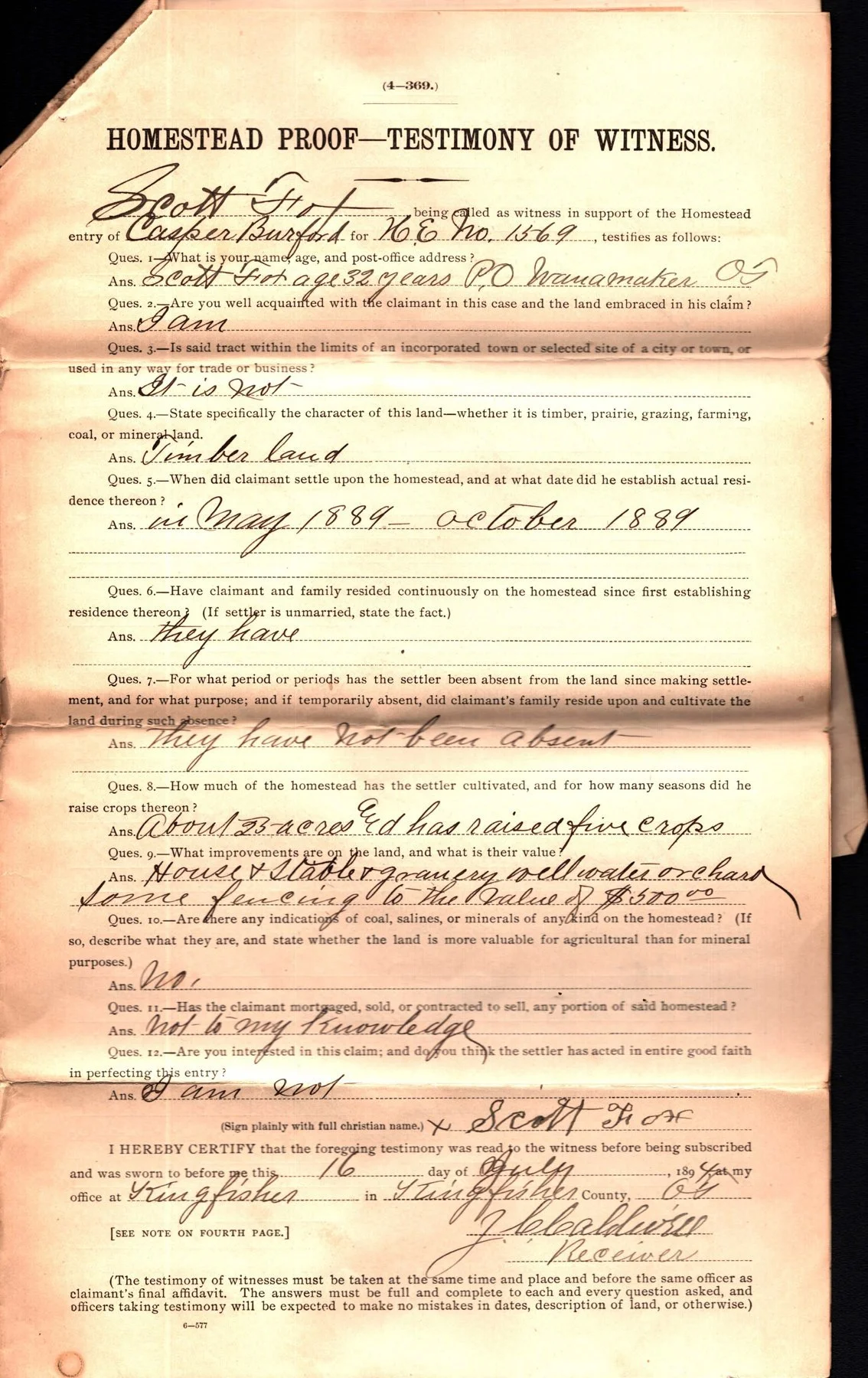
What did that testimony actually sound like? On July 16, 1894, a 32-year-old named Scott Fox walked into the land office at Kingfisher, Oklahoma Territory, to vouch for his neighbor Casper Burford. Asked what Burford had done with the place, Fox answered: about 23 acres under cultivation, five crops raised, and a house, stable, granary, well, orchard and some fencing worth about $500. Asked if Burford's family had ever left, Fox said, "They have not been absent."
That's proving up. A neighbor under oath, twelve questions, and five years of work boiled down to a few lines of ink.
There was also a shortcut, and people used it. Section 8 let a claimant "commute" the claim: live there six months, make some improvements, then buy the land at $1.25 an acre. That's $200 for 160 acres. It was also a favorite tool of speculators, who paid stand-ins to file and then bought them out.
Why did homesteaders build sod houses?
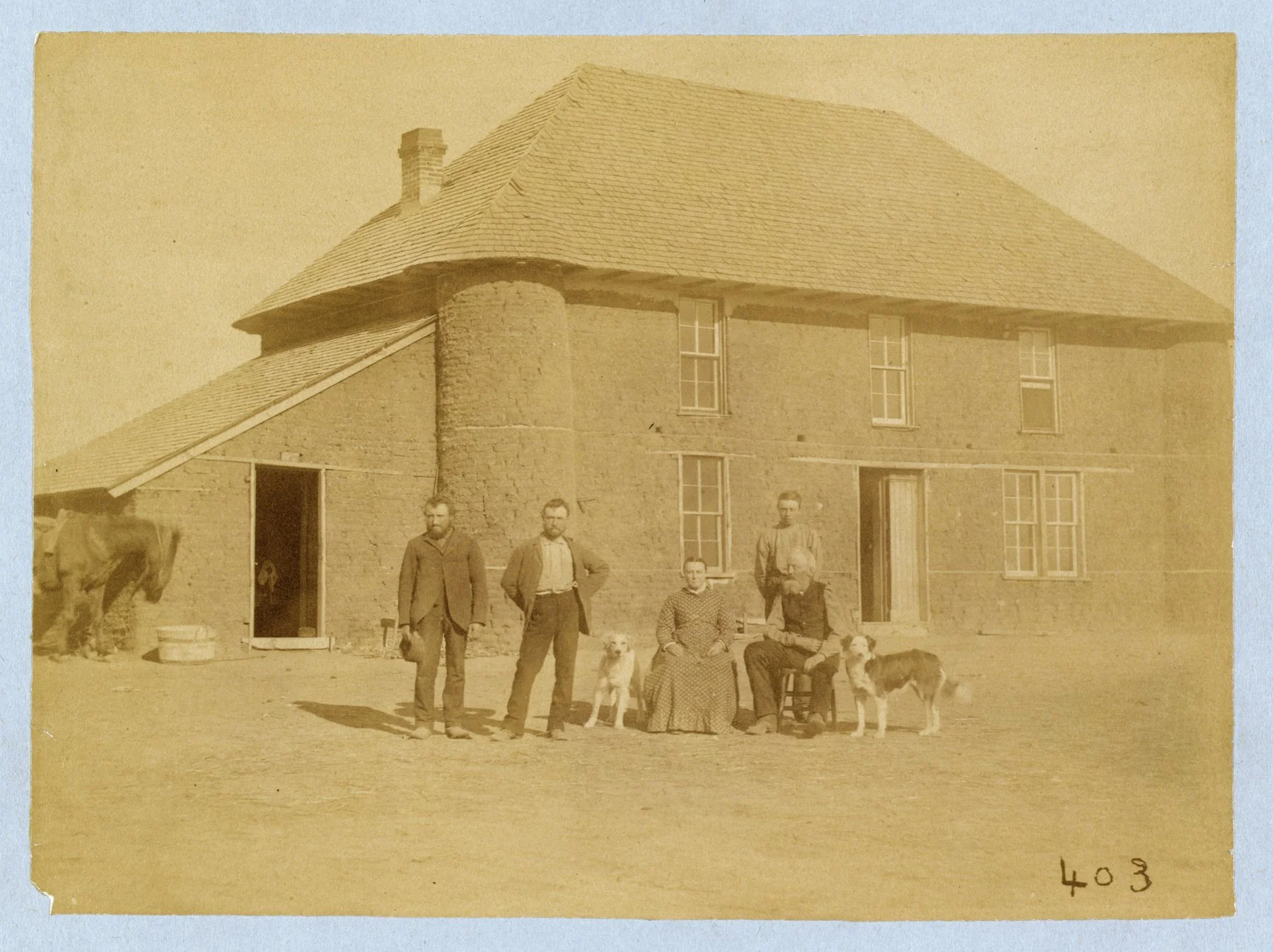
On the treeless Great Plains there was almost no lumber, so settlers built with what was under their boots: thick prairie sod cut into bricks. Sod houses were cheap, quick, fireproof and well insulated, but they leaked, shed dirt and drew bugs and snakes. History Nebraska puts their average life at six or seven years.
People joked that it was "Nebraska marble."
The recipe, according to History Nebraska's leaflet on the sod house: plow about an acre of prairie into strips 12 inches wide and 4 inches thick. Chop the strips into three-foot bricks. Lay them grass side down, two feet thick, crossing every few layers so the wall locks together. The Park Service figures half an acre of sod could build a house 16 by 20 feet.
A soddy was warm in winter and cool in summer. It didn't burn, and it stood up to Plains wind. Rain was another story. Roofs dropped mud, water, and now and then a snake. One Kansas pioneer, Carrie Lassel Detrick, remembered her mother seeing the family's new sod house for the first time and giving way to "the only fit of weeping I ever remember seeing her indulge in."
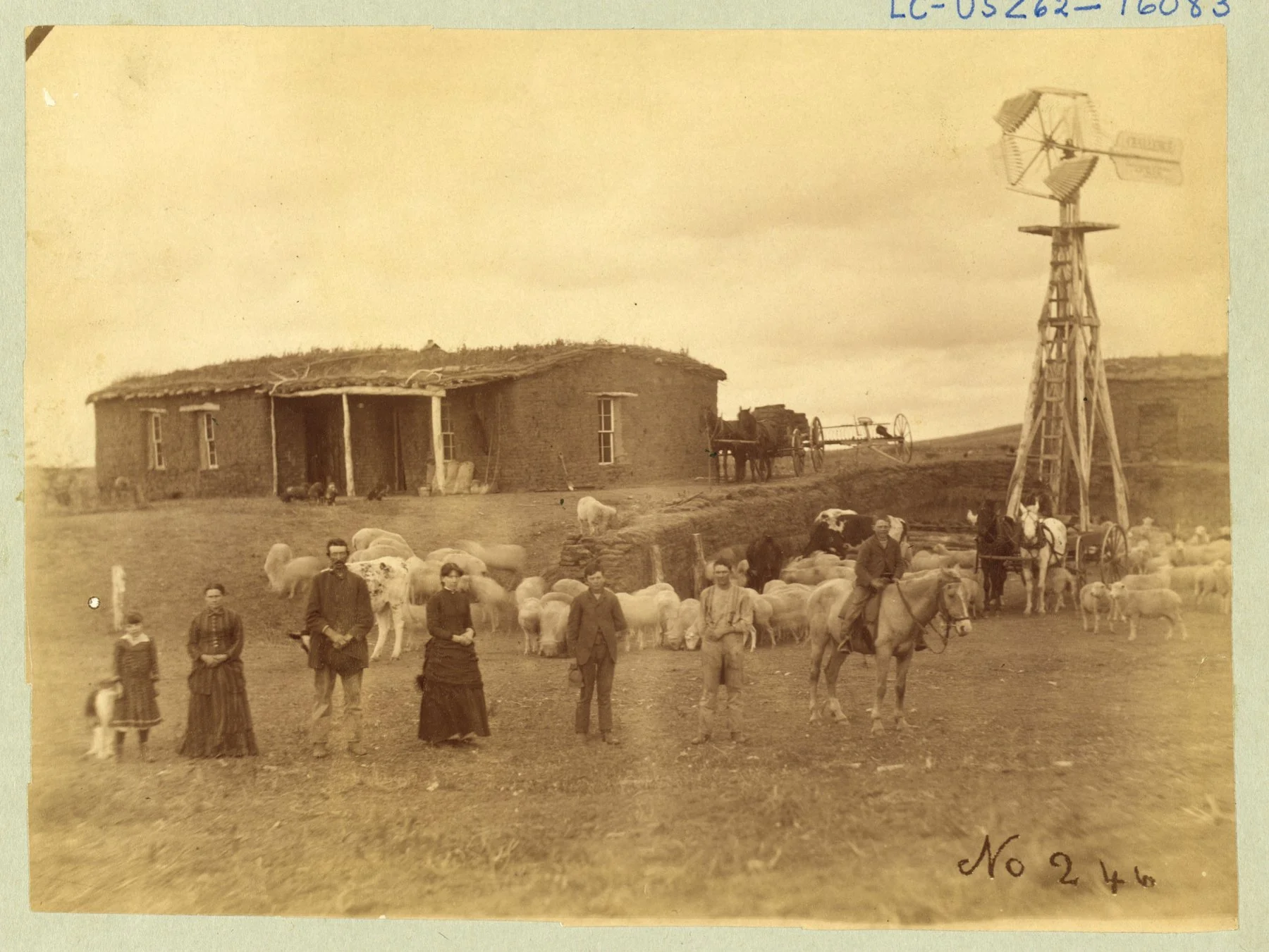
Most of what we know about how these families looked comes from one man. Solomon D. Butcher started carrying a camera around Custer County, Nebraska, in 1886, and families lined up in front of their soddies with their horses, windmills and best clothes. About 3,000 of his glass-plate negatives survive at History Nebraska, and the Library of Congress has them online. He belongs on any list of famous photographers of the American West.
What was daily life like on a homestead?
Hard, and mostly about fuel, water and weather. Settlers burned buffalo chips, cow chips, corn and prairie hay for heat, hauled water long distances or dug wells hundreds of feet deep, and lost crops to wind, blizzards and insects. Many never finished their five years.
With no woodlots, people burned what the plains gave them: buffalo chips, cow chips, corn, sunflowers and prairie hay.
Water could be worse. History Nebraska notes that some wells were dug several hundred feet before they hit water, and until then water was hauled, often a long way. That's why the windmill in so many Butcher photos is posed like a member of the family.
Then the weather. The National Archives names the big threats plainly: wind, blizzards and plagues of insects.
And the math didn't always work. A quarter section was a decent farm in Ohio. On the dry plains, 160 acres often couldn't support a family or a herd. The National Archives' own history admits that in many areas the original homesteader didn't stay long enough to finish the claim.
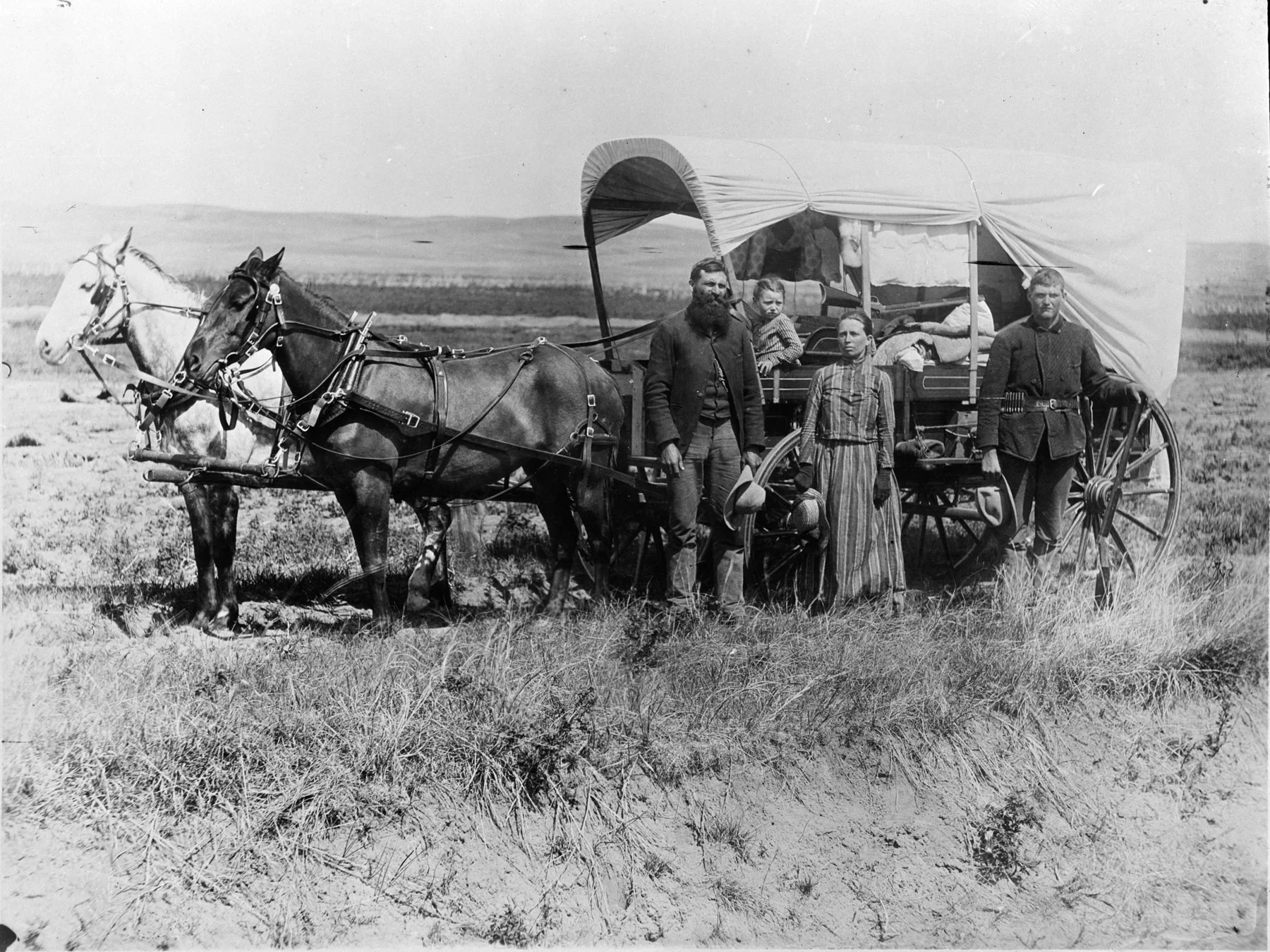
Could women homestead?
Yes. The 1862 law said "he or she," so single women, widows and female heads of household could file in their own names. The National Archives says at least 10 percent of homesteads went to single women, and in parts of the West in the early 1900s women made up 10 to 15 percent of homesteaders.
Before 1900, women were fewer than one in ten homesteaders. Then the share climbed. Part of the reason was a book. Elinore Pruitt Stewart's letters from her Wyoming claim ran in the Atlantic Monthly and came out in 1914 as Letters of a Woman Homesteader. WyoHistory.org estimates single women claimed roughly 12 percent of western homesteads.
By the early 20th century, the National Archives' Text Message blog estimates, women made up 10 to 15 percent of homesteaders in Colorado, Wyoming, Montana, the Dakotas and Utah. In the dry-farming country of southeastern Oregon, maybe one in six homesteaders was a young single woman on her own. Alice Day Pratt was one. She started in Crook County in 1912 and later wrote about the jackrabbits, the isolation, the hostile ranchers and the weather.
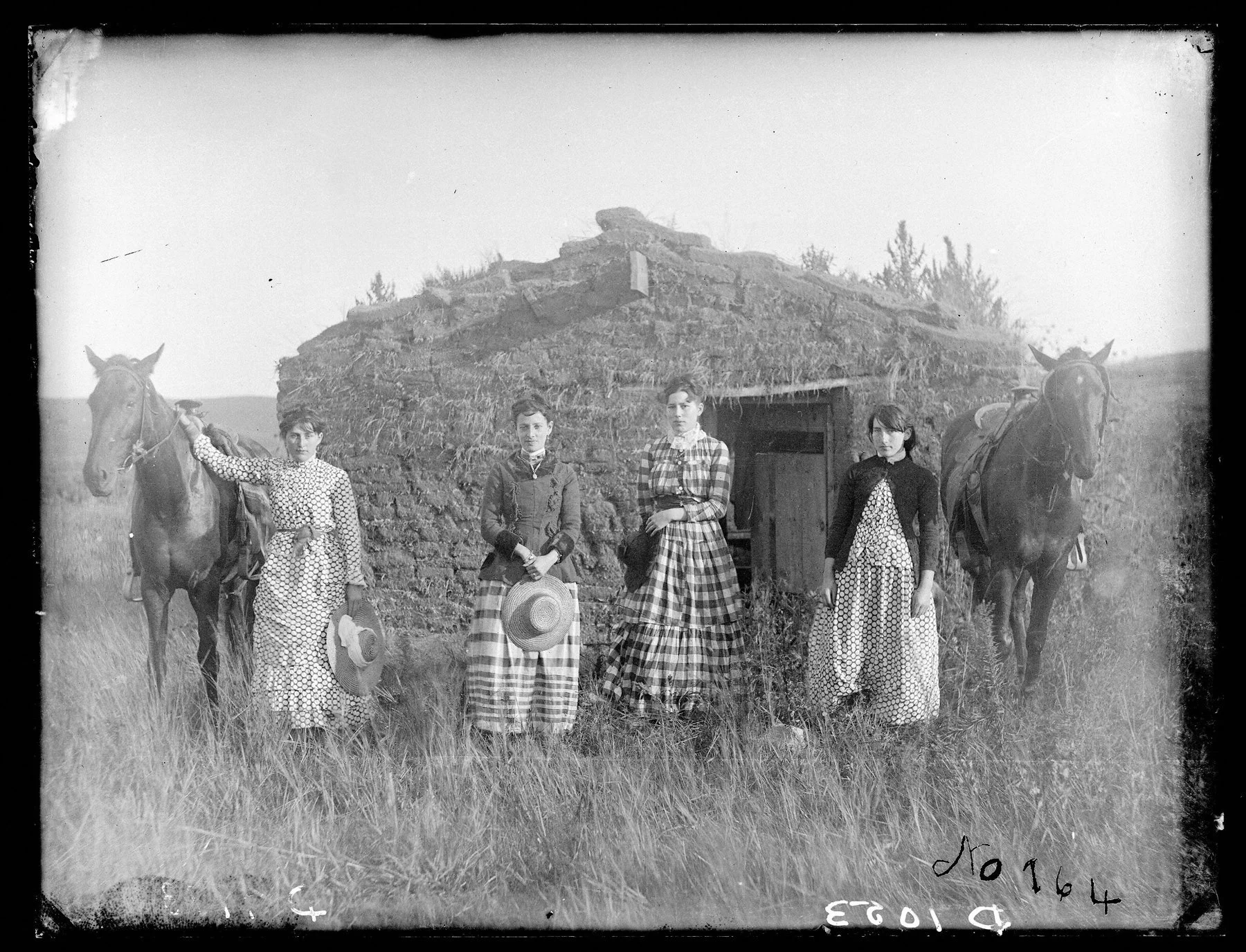
Did Black Americans and immigrants homestead?
Yes. Black families who left the South after the Civil War founded homestead colonies such as Nicodemus, Kansas, in 1877, and thousands of "Exodusters" followed in 1879–1881. Immigrants qualified once they declared their intent to become citizens, and German, Scandinavian and Czech settlers filled whole counties.
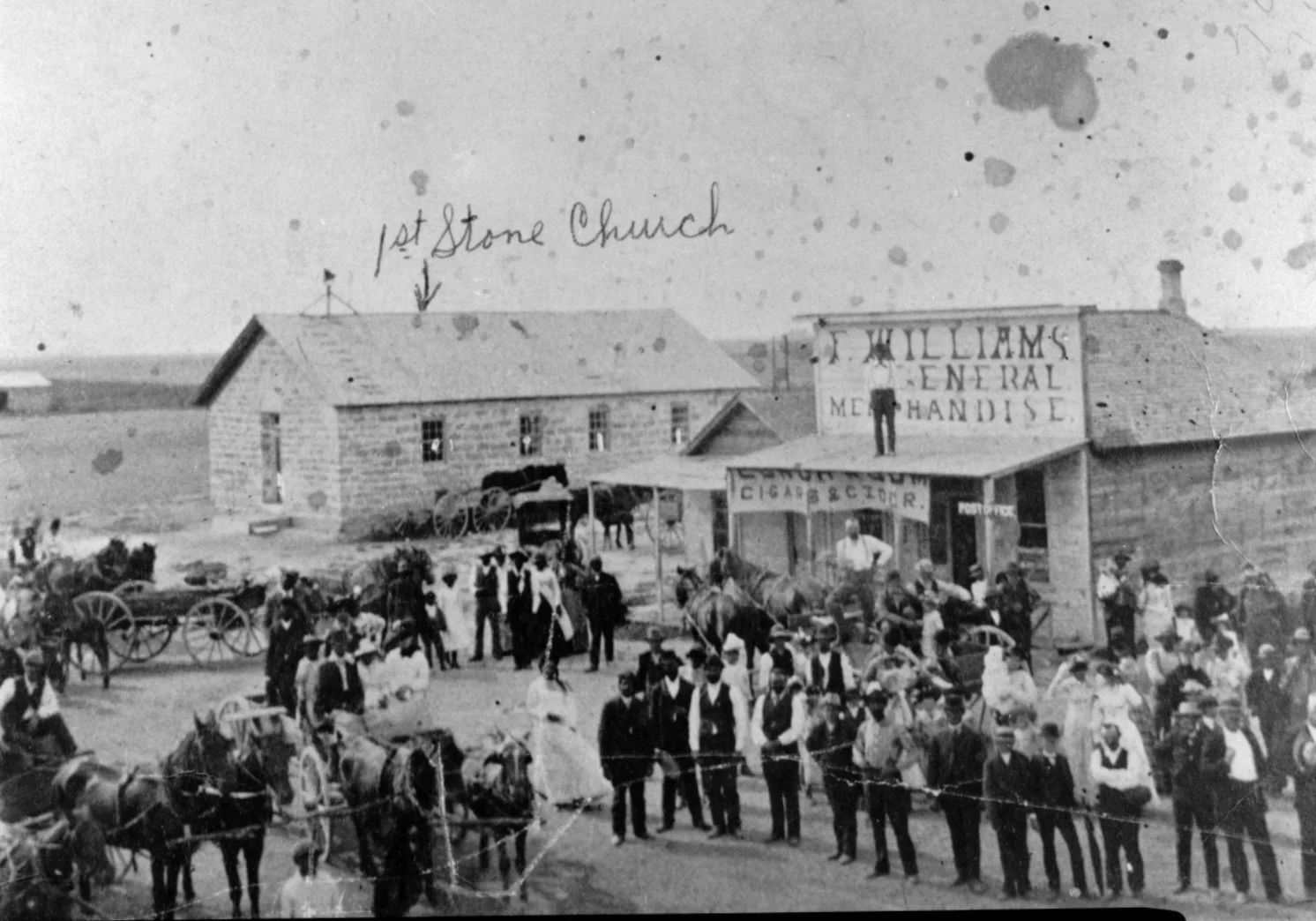
On September 17, 1877, about 350 settlers from Kentucky reached a town site on the high plains of Graham County, Kansas. The ads back home had called it "The Largest Colored Colony in America." What they found, the Kansas Historical Society says, was a scattering of dugouts in the ground.
Some turned around. Others stayed. By 1899, the National Park Service reports, Nicodemus homesteaders held 114 homestead patents covering 18,126 acres. Nicodemus is the longest-lasting Black homestead colony in America, and it's a National Historic Site today.
Then came the Exodusters, Black families who fled the post-Reconstruction South for Kansas from 1879 to 1881, most by steamboat up the Missouri, most with almost nothing. By 1880, the Kansas Historical Society counts, Kansas had 43,107 Black residents. Their story gets its own article next in this series.
Whose land was it before the homesteaders?
It was Native land. The 30 homestead states were the homelands or treaty lands of many tribes, including the Lakota, Pawnee, Cheyenne and Osage. Most of it passed to the United States through treaties, forced cessions, removals and war, sometimes years before homesteaders arrived and sometimes right alongside them.
The National Park Service, at the very park built on Daniel Freeman's claim, puts it in two sentences: "To settlers, immigrants, and homesteaders, the West was empty land. To Native Americans, it was home."
Take the Pawnee. Under the 1857 Table Creek treaty they gave up most of their Nebraska land and kept a reservation on the Loup Fork. After grasshoppers and poverty hit hard, the tribe asked in 1874 to sell the reservation, and by October 1875 the Pawnee had moved to Indian Territory. Their old country became homestead country. These are the same people whose scouts rode with Frank North, and whose older traditions we covered in the last Pawnee Morning Star sacrifice of 1836.
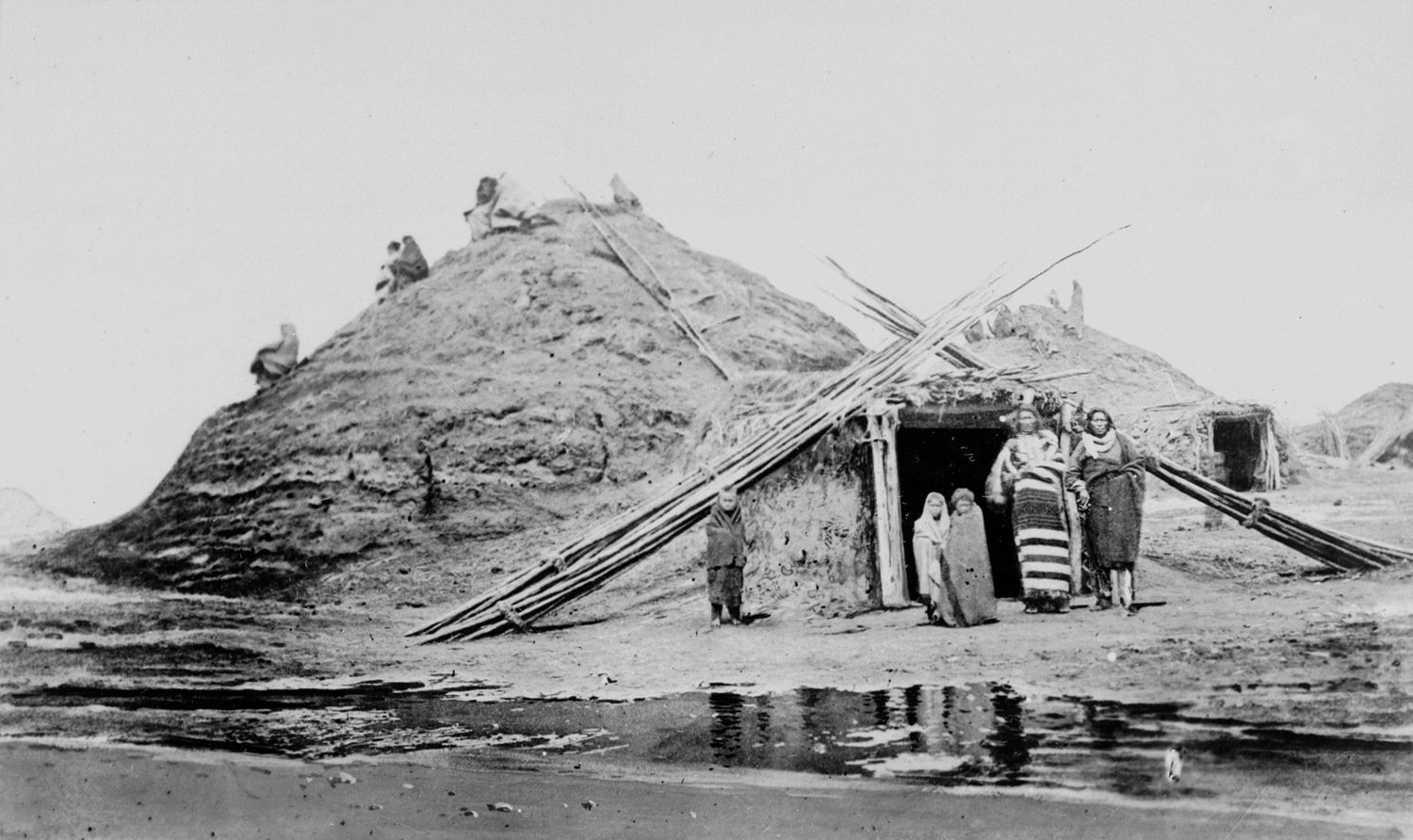
Notice that lodge. The Pawnee were building with earth on these plains long before anyone called sod "Nebraska marble."
Further north, the 1868 Treaty of Fort Laramie recognized the Black Hills as Lakota land, until gold changed Washington's mind. To see who lived on the Plains before the claim shanties, read what daily life was like for the Lakota on the frontier.
Then the Dawes Act of 1887 cut reservations into 160-acre allotments and opened the "surplus" to settlers. Reservation land fell from 138 million acres in 1887 to 48 million in 1934, the NPS says.
How much of that was homesteading's doing? The 2017 study Homesteading the Plains found it depends on the state. In Nebraska, most tribal titles were cleared before 1862. In Colorado and Montana, mining, railroads and cattle drove it. In the Dakotas and Oklahoma, homesteading was "an important driver of dispossession."
The honest version holds both truths. A poor family earned its land with five years of brutal work. And somebody else had already lost it.
Did the Homestead Act work?
For some families, gloriously. NPS says more than half of homesteaders proved up, and about 270 million acres reached private owners. But fraud was common, and the National Archives notes that of some 500 million acres the government handed out from 1862 to 1904, only 80 million went to homesteaders.
The rest went to railroads, speculators, cattle outfits, miners and loggers, and underpaid land office investigators could be bribed. Nor did the law cure poverty. The National Archives notes that few laborers could afford the tools, seed and livestock to start a farm. Most homesteaders came from nearby: Iowans to Nebraska, Minnesotans to South Dakota.
Here's the surprise: small farmers got more land under the Homestead Act in the 20th century than in the 19th. Congress kept rewriting the rules for drier country:
| Year | Law | Acres per claim |
|---|---|---|
| 1862 | Homestead Act | 160 |
| 1873 | Timber Culture Act (plant trees on part of the claim) | 160 |
| 1904 | Kinkaid Act (western Nebraska only) | 640 |
| 1909 | Enlarged Homestead Act (dry, non-irrigable land) | 320 |
| 1916 | Stock-Raising Homestead Act (grazing land) | 640 |
| 1976 | Federal Land Policy and Management Act repeals homesteading (Alaska until 1986) | — |
The 1909 law set off a stampede. In Montana, according to the National Archives, homestead entries jumped from about 7,500 in 1909 to nearly 22,000 the next year. The peak year for homesteading wasn't in the 1870s or 1880s. It was 1913, when about 11 million acres were claimed (NPS).
When did homesteading end?
Congress repealed the Homestead Act in the lower 48 states with the Federal Land Policy and Management Act of 1976, and allowed claims in Alaska for ten more years. The last homestead patent went to Vietnam veteran Kenneth Deardorff on May 5, 1988, for 80 acres on the Stony River in Alaska.
Deardorff grew up near Los Angeles, was wounded in Vietnam, finished a geography degree, and in 1974 asked the Bureau of Land Management in Anchorage about homesteading. His claim on the Stony River had no road anywhere near it. Mail came about once a month. He ran a small store for river travelers and trapped furs. He met every requirement by 1979, then waited nine years for the paperwork. The National Park Service still doesn't know why it took so long.
Freeman filed in 1863. Deardorff got his patent in 1988. That's 125 years of homesteading, and the National Archives keeps them both.
How can you find your ancestor's homestead records?
Start at the Bureau of Land Management's free General Land Office Records site and search your ancestor's name and state. If a patent shows up, note the land office, the authority and the document number, then order the full case file from the National Archives with NATF Form 84 or online.
Every homestead claim created paperwork, and a lot of it survived. The National Archives holds over ten million land entry case files from the 30 public land states.
- Find when and where they lived. Census records are the usual starting point.
- Search GLO Records. It's free. It only lists claims that were completed, so a failed claim won't show.
- Write down the details. For pre-1908 files you need the state, land office, type of patent (the "Authority" field) and patent number (the "Document Nr." field). For 1908 and later, the serial number in the "Accession Nr." field.
- Order the case file. Use NATF Form 84 or order online from the National Archives.
- Check the digitized sets first. Some files are already online: Ancestry's "U.S., Homestead Records, 1863–1908," Fold3's "Homestead Records (NE)," and FamilySearch's "U.S., Homestead Final Certificates, 1863–1909."
A case file can hold the original application and the witness testimony, like Scott Fox's answers above. For many families it's the only written record of what their ancestors built.
No federal file exists for the original 13 states, Texas, Kentucky, Tennessee, Vermont, Maine, West Virginia or Hawaii. Start at that state's archives.
Our upcoming guide walks through the search step by step. And if your family still has the deed, a land patent, or a photo of the old soddy, What Your Family Kept is built for exactly that.
What can we learn from the homesteaders today?
The homesteaders show that ordinary people built much of America with plain hard work and a lot of paperwork. Many failed. Their success came at a real cost to Native nations. And their best record isn't in a textbook. It's in deeds, case files, letters and photographs that families kept.
Most homesteaders never made a history book. They were people like Casper Burford: 23 acres, five crops, a well, an orchard, and a neighbor willing to swear to it.
We know about them because somebody kept the paper. A patent in a tin box. A Butcher photograph. A witness form in a federal file.
May 20, 1862, didn't make our list of the 10 most important dates in U.S. history. It has a fair claim to a spot. By the National Park Service's estimate, about 93 million Americans alive today descend from homesteaders.
The lesson: Big history is mostly small people doing hard work and writing it down. Keep the papers. Someday somebody will need them.
Frequently Asked Questions
How much did it cost to homestead in 1862?
The filing fee was $10, plus a land office commission paid half at filing and half at final proof. Settlers who wanted the land sooner could buy it after six months at $1.25 an acre, or $200 for 160 acres.
Is the Homestead Act still in effect?
No. The Federal Land Policy and Management Act of 1976 ended homesteading in the lower 48 states. Alaska claims were allowed until 1986, and the last patent was issued in 1988.
How many people got land under the Homestead Act?
About 4 million claims were filed, and the National Park Service says more than half proved up. Counts vary by source. Together, homesteaders received about 270 million acres, roughly 10 percent of the United States.
What is a land patent?
A land patent is the original deed that transfers land from the U.S. government to a private owner. A homesteader got one after proving up. You can search completed patents free at the BLM's GLO Records website.
What was the Timber Culture Act?
Passed in 1873, it offered another 160 acres to settlers who planted and kept trees growing on part of the claim. It was meant to green the prairie, was widely abused, and was repealed in 1891.
What was a "soddy"?
A soddy was a house built from blocks of prairie sod laid grass side down. Plains settlers built them because there was almost no timber. They were warm, fireproof and cheap, but leaked and usually lasted six or seven years.
Keep exploring the homestead series
- Coming Nov 10: The Exodusters, how Black Americans fled the South to homestead Kansas.
- Coming Nov 17: Living in the Dirt, what life was really like in a sod house on the Plains.
- Coming Nov 24: Your Family's Land, how to find out if your ancestor was a homesteader.
- More frontier history: Jedediah Smith, the mountain man who crossed the West before the maps were finished, and the full Chronicles of History archive.
Was your family on a homestead?
Somebody in your family may have stood in a land office line, sworn an oath and spent five years on 160 acres. If you still have the deed, a letter, or a photo of the old place, we want to see it.
Share it with What Your Family Kept · Join the Chronicles Community
The Short Version: Homestead Act Quick Facts
Definition: The Homestead Act of 1862 was a U.S. federal law, signed by President Abraham Lincoln on May 20, 1862, and effective January 1, 1863. It granted up to 160 acres of surveyed public land to any adult citizen or intending citizen who had never fought against the United States, after five years of residence and cultivation and a $10 filing fee.
- Who could claim land? Heads of household or anyone 21 or older who was a citizen or had declared intent to become one, including single women, widows, immigrants and freedpeople.
- What was proving up? After five years on the land, the homesteader and two witnesses swore to the residence and improvements at the land office, and the government issued a patent (deed).
- Could you buy it faster? Yes. After six months, a claimant could pay $1.25 per acre instead.
- Why sod houses? The Plains had little timber. Settlers cut prairie sod into bricks; houses lasted about six or seven years on average.
- Did it take Native land? Yes. Homestead lands were Native homelands or treaty lands acquired through treaties, cessions, removals and war. The Dawes Act of 1887 opened even more reservation land.
- Did it work? Partly. More than half of claimants proved up, but much public land went to railroads and speculators, and fraud was common.
- When did it end? Repealed in 1976; Alaska until 1986. The last patent went to Kenneth Deardorff in 1988.
- How do I find an ancestor's claim? Search BLM GLO Records, then order the land entry case file from the National Archives.
Key numbers: 160 acres · $10 fee · 5 years · $1.25/acre commutation · about 4 million claims · about 270 million acres (about 10% of the U.S.) · 30 states · 1863–1986 · Nebraska 45% homesteaded · peak year 1913.
Sources: National Archives (Homestead Act text; educator lesson; land entry records), National Park Service (Homestead National Historical Park; Nicodemus), Kansas Historical Society, History Nebraska, Library of Congress.
Sources
- National Archives, Homestead Act (1862), Milestone Documents, full transcript.
- National Archives, The Homestead Act of 1862, educator background (Potter and Schamel).
- National Archives, Land Entry Case Files and Related Records and Accessing Land Entry Records.
- National Archives, Prologue, "How the West Was Won" (Winter 2012), PDF.
- National Archives, The Text Message blog, "Women Homesteaders" (Sept. 2, 2021).
- National Archives at Seattle, The final homestead patent, Kenneth Deardorff, 1988.
- National Park Service, Homestead National Historical Park: Homesteading by the Numbers; About the Homestead Act; Native Americans and the Homestead Act; Kenneth Deardorff; park brochure (2012), PDF.
- National Park Service, Nicodemus, Kansas and Nicodemus National Historic Site.
- Bureau of Land Management, General Land Office Records.
- Kansas Historical Society, Kansapedia: Nicodemus, Graham County and Exodusters.
- Nebraska State Historical Society (History Nebraska), Educational Leaflet No. 3, "The Sod House" (online transcription); Solomon D. Butcher Collection.
- Library of Congress, Prairie Settlement: Nebraska Photographs and Family Letters, 1862–1912.
- Oklahoma State University, Treaty with the Pawnee, 1857.
- WyoHistory.org, Elinore Pruitt Stewart, Writer and Homesteader.