

The Last Pawnee Sacrifice, 1836 — The Morning Star Ritual
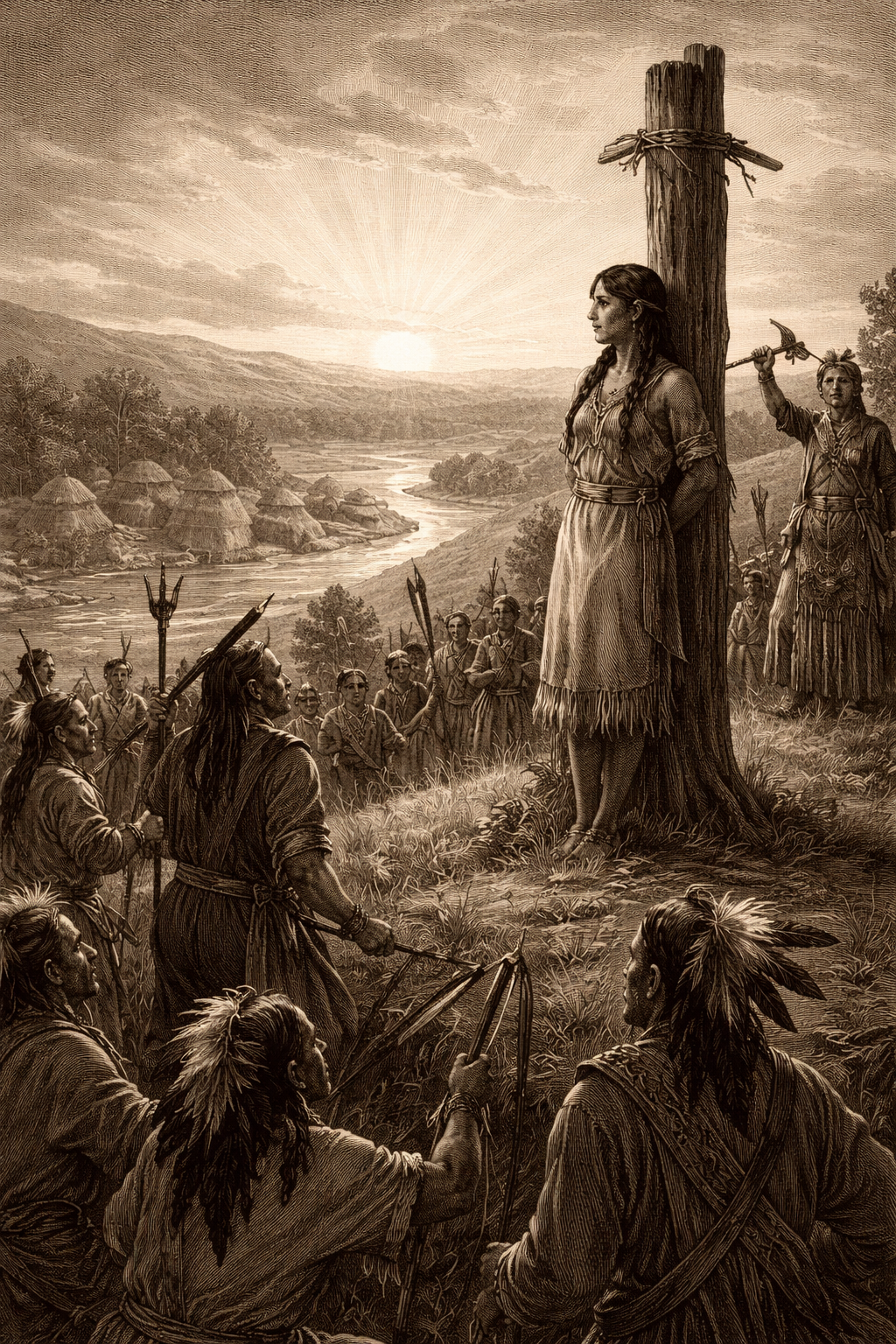
The Morning Star Ritual: A Hard Truth in Pawnee History
History is not always meant to be comfortable. Some truths unsettle us—not because they are false, but because they are human. One such truth is the Morning Star ritual, a religious ceremony once practiced by the Pawnee people. It is real. It is documented. And it is often misunderstood.
To tell this story honestly requires restraint: no sensationalism, no excuses, and no modern moral posturing. Only context, evidence, and truth.
Who the Pawnee Were
The Pawnee were not a primitive or wandering people. They were a settled, agricultural society living primarily along the Platte River in present-day Nebraska. They built permanent earth lodges, cultivated corn, beans, and squash, and maintained large villages supported by complex social and religious systems.
Central to Pawnee life was an advanced astronomical worldview. The stars were not distant objects; they were living forces that governed fertility, seasons, warfare, and survival. Religion, agriculture, and cosmology were inseparable. To the Pawnee, human actions on Earth were meant to reflect order in the heavens.
The Pawnees had a long standing rival of enemies on the Western plains agains The Crow and Lakota Indians.
What the Morning Star Ritual Was
The Morning Star ritual was rare, ceremonial, and highly symbolic. It was rooted in Pawnee star religion and centered on the cosmic relationship between Morning Star and Evening Star.
In Pawnee belief:
Morning Star represented power, renewal, and life
Evening Star represented fertility and cosmic balance
The ritual reenacted this celestial struggle and union. Its purpose was not punishment or vengeance, but the restoration of balance believed necessary for the continuation of life.
Why Women Were Taken
The individual chosen for the ritual was typically a young woman captured during warfare, most often from enemy tribes. She symbolized Evening Star—not because of her identity as a person, but because of what she represented within Pawnee cosmology.
Historical accounts consistently note:
The ritual was not frequent
The captive was not chosen randomly
She was often treated with ceremonial respect during captivity
This does not excuse the act. It explains how the Pawnee themselves understood it.
How the Ritual Was Carried Out
The Morning Star ritual followed a prescribed ceremonial structure. It was not an impulsive act of violence, nor a private execution. It was public, ritualized, and religious in nature, meant to mirror cosmic order.
On the day of the ceremony:
The woman was led to a prepared site outside the village
Priests and warriors representing Morning Star conducted the rite
Songs, prayers, and symbolic movements accompanied each step
The death itself occurred through ritualized wounding, traditionally involving arrows or a ceremonial weapon. Contemporary observers and later Pawnee oral histories emphasize that the act was intended to be swift and solemn, not torturous. Within the belief system, it was the fulfillment of a sacred obligation rather than an act of cruelty.
That distinction does not justify the act—but it matters for understanding it.
Why the Ritual Came to an End
By the early 19th century, the Morning Star ritual was already under debate within the Pawnee nation itself. Chiefs and elders increasingly recognized that continuing the practice endangered their people—politically, militarily, and socially—in a rapidly changing world.
Internal opposition coincided with growing external pressure.
As U.S. Superintendent of Indian Affairs, William Clark actively worked to discourage the ritual. Clark, most known for The Lewis and Clark expedition was a massive leader in Native American affair relations. Clark met with Pawnee leaders repeatedly, urging them to abandon the practice and warning that its continuation could bring serious consequences. His efforts aligned with Pawnee leaders who were already questioning whether an ancient religious obligation still served their people’s survival.
The last widely accepted and documented Morning Star sacrifice occurred in 1836.
After that point, the ritual ended—not through conquest, but through choice.
Why This History Matters
The Morning Star ritual did not define the Pawnee—just as abandoning it did not erase their past. Cultures are not static. They wrestle with their own contradictions. They change when survival, morality, and reality collide.
Within a generation of ending this ritual, the Pawnee would become U.S. allies and scouts, navigating a world that was closing in on them from all sides.
This history reminds us that moral conflict is not new. The hardest changes are often the ones that require letting go of what was once considered sacred.
History is not meant to flatter us.
It is meant to teach us.