

Five Western American Photographers Who Captured American History
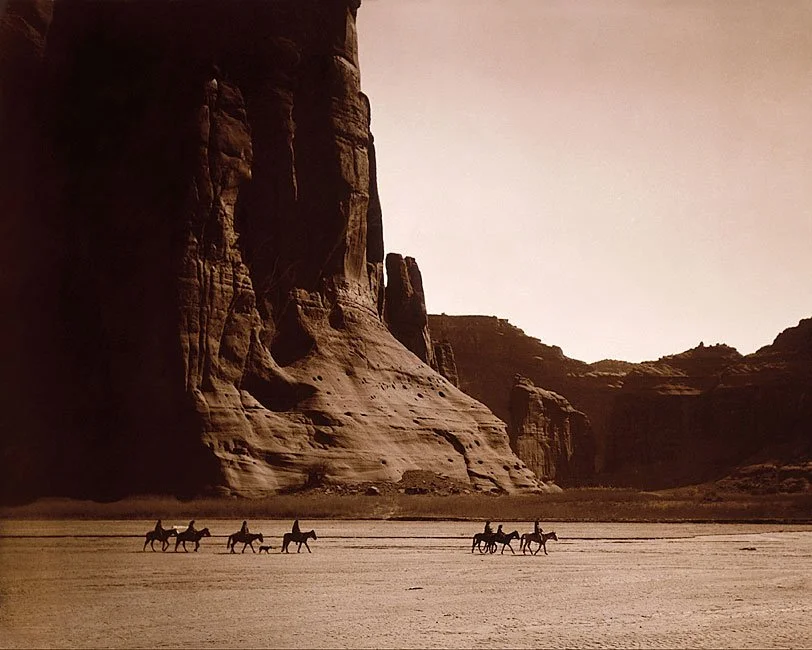
Edward S. Curtis photo of Navajo Indians in Canyon de Chelly. Date, 1904.
Long before motion pictures, television documentaries, and social media, America came to understand the West through photographs.
The American frontier was not only written about in newspapers or romanticized in dime novels. It was captured through glass plates, albumen prints, cabinet cards, studio portraits, survey images, and later massive photographic collections that tried to preserve a world changing almost faster than anyone could record it.
The American West was never one simple story. It was wilderness and empire. It was Native nations and U.S. expansion. It was cowboys, soldiers, miners, railroad towns, performers, scouts, sharpshooters, homesteaders, and families trying to survive a harsh and beautiful landscape. Photography gave Americans a way to see it.
Some photographers documented the West as explorers. Others captured Native American life during a period of immense pressure and cultural disruption. Some helped sell the West to the public. Others preserved the faces of people who might have otherwise disappeared from the historical record.
To understand the Old West, you have to understand the images that shaped it. These five Western American photographers and visual storytellers helped capture American history in a way words alone never could.
1. Edward S. Curtis: The Photographer Who Tried to Preserve Native American Life
No name is more closely connected to historic Native American photography than Edward S. Curtis.
Born in Wisconsin in 1868, Curtis became one of the most recognized photographers of Native peoples in North America. His life’s work became The North American Indian, a massive project published between 1907 and 1930 that attempted to document Native tribes, traditions, clothing, ceremonies, portraits, and daily life across the continent.
Curtis was not simply taking random portraits. He was building an archive. He traveled widely, photographed people from dozens of Native nations, and created images that became some of the most recognizable Native American photographs ever produced. His work has appeared in books, documentaries, museums, historical articles, and classrooms for generations.
The Library of Congress Edward S. Curtis Collection contains thousands of Curtis images and remains one of the most important visual archives of Native American history. Northwestern University also preserves a major digital version of The North American Indian, making much of Curtis’s work available for modern readers and researchers.
But Curtis’s legacy is complicated.
On one hand, he preserved thousands of images of Native people during a time when U.S. policy, reservation life, forced assimilation, and the boarding school era were reshaping Native communities. Without his work, many faces, garments, tools, homes, and ceremonial scenes may not have been recorded in such detail.
On the other hand, Curtis often staged or romanticized scenes to fit a vision of Native life as vanishing, timeless, and untouched by modernity. That framing can distort history. Native people were not frozen in the past. They were adapting, resisting, surviving, and living in the modern world around them.
That tension is exactly why his work matters. Curtis did not merely capture Native American history; he helped shape how millions of Americans imagined it.
His photographs remain visually stunning, historically valuable, and deeply debated. They are especially important when studying the people, culture, and daily realities of Native nations on the frontier. For readers interested in that world, our article on what daily life was like for the Lakota on the frontier gives deeper context to the people and communities so often viewed through the lens of outside observers.
For anyone studying the American West, Edward S. Curtis is essential. His photographs show dignity, beauty, ceremony, and presence. They also remind us that photography is never neutral. The person behind the camera chooses the frame, the setting, the pose, and the story.
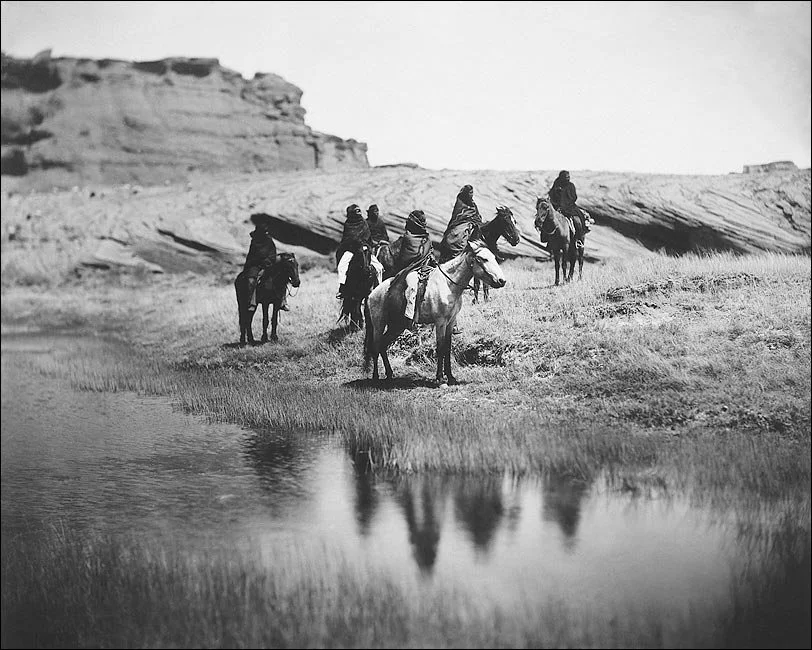
1904, Canyon de Chelly, Arizona. Six Navajo riders cut through the desert like ghosts from another age — cloaked in blankets, mounted on hardy horses, approaching the water’s edge under a blazing sun. Photo by Edward S. Curtis
2. Richard K. Fox: The Publisher Who Turned Western Figures Into National Icons
Richard K. Fox is not always listed beside traditional field photographers of the American West, but he belongs in this conversation for one important reason: he helped turn frontier personalities into visual icons.
Fox was the influential publisher of the National Police Gazette, one of the most widely circulated illustrated publications of the late 19th century. His paper leaned into sports, crime, scandal, entertainment, physical culture, sharpshooters, performers, boxers, and celebrity figures. In many ways, Fox helped create an early version of American mass-media fame.
For Western history, his importance shows up through images and publicity connected to figures like Annie Oakley. Oakley became one of the most famous sharpshooters in American history, and visual media played a major role in building her national reputation. A well-known portrait of Annie Oakley shows the kind of image that helped turn a real frontier performer into an American icon.
That matters because the American West was not only documented on the plains, in the mountains, or on reservations. It was also sold to the public through print culture.
Buffalo Bill’s Wild West, Annie Oakley, dime novels, illustrated weeklies, posters, cabinet cards, and newspapers all helped transform real people into national legends. Fox understood the power of image. He knew that Americans did not just want to read about sharpshooters, fighters, performers, and frontier characters. They wanted to see them.
His Police Gazette helped create a bridge between photography, illustration, celebrity, and popular American mythology. Images tied to Fox’s publishing empire helped shape how people imagined toughness, marksmanship, frontier masculinity, female sharpshooting, and Old West spectacle.
Was Fox a wilderness photographer like Timothy O’Sullivan or William Henry Jackson? No. But as a visual publisher and promoter, he helped circulate the faces and legends of the West to a national audience. That makes him important to the photographic history of the American West.
In a way, Fox captured a different kind of frontier: the frontier of American celebrity. Through his publications and copyrighted images, he helped turn Western performers into household names.
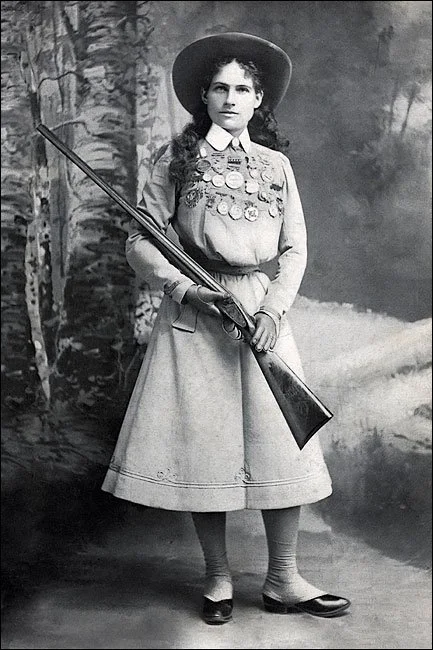
1899 - Annie Oakley. Photo by Richard K. Fox.
3. Timothy H. O’Sullivan: The Photographer of the Harsh and Mysterious West
Timothy H. O’Sullivan captured a West that felt ancient, empty, dangerous, and almost otherworldly.
Before photographing the American West, O’Sullivan worked during the Civil War, where photography was already changing the way Americans understood conflict. After the war, he became one of the most important photographers attached to major western surveys.
The Smithsonian American Art Museum describes O’Sullivan as a photographer for two of the most ambitious geographical surveys of the 19th century. He traveled through mountain and desert regions of the western United States under Clarence King and Lt. George M. Wheeler, bringing back images that revealed landscapes many Americans had never seen before.
O’Sullivan’s western images are not soft or sentimental. They often show landscapes that look massive, silent, and unforgiving. His photographs of deserts, canyons, rock formations, river valleys, and survey camps presented the West as a place of geological force and human smallness.
This is what makes O’Sullivan so important.
A lot of 19th-century western art made the frontier look inviting, fertile, romantic, or destined for settlement. O’Sullivan’s photographs often did the opposite. They showed the West as difficult. The land appears vast and indifferent. Human beings, when they appear at all, seem tiny against the scale of the terrain.
That gave Americans a more complex visual record of western expansion. The West was not just opportunity. It was also isolation, hardship, scientific curiosity, and danger.
His work also mattered politically and scientifically. Survey photographers were not simply artists. They were part of federal projects that mapped, studied, and interpreted western lands. Their images helped government officials, scientists, investors, and citizens visualize places many had never seen.
O’Sullivan’s photographs remain some of the most powerful early images of the American West because they resist easy mythology. They do not simply celebrate conquest or settlement. They make the viewer feel the strangeness of the land itself.
If Curtis gave America faces, O’Sullivan gave America scale.
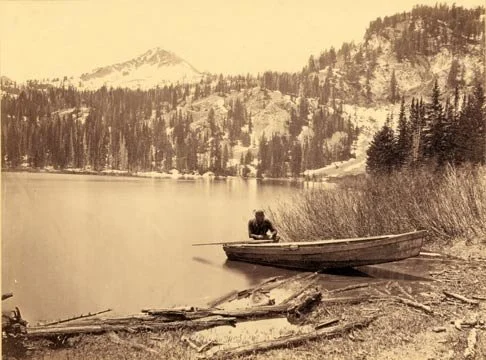
Timothy H. O’Sullivan - Cottonwood Lake, Utah, 1869
4. William Henry Jackson: The Photographer Who Helped Make Yellowstone Famous
William Henry Jackson helped Americans see Yellowstone before most of them could ever visit it.
Jackson is one of the most important landscape photographers in American history. The National Park Service describes him as the first person to photograph the wonders of Yellowstone, and his images helped support the effort to create Yellowstone National Park.
That alone makes him a giant in western photography.
In the early 1870s, Yellowstone was still more rumor than destination for many Americans. Stories of geysers, hot springs, waterfalls, strange terraces, and dramatic canyons sounded almost unbelievable. Jackson’s photographs gave visual proof. His images helped convince lawmakers and the public that Yellowstone was not just another scenic place. It was a national treasure.
Photography played a direct role in conservation history. Before mass tourism, before color film, and long before modern travel photography, Jackson’s camera helped introduce Americans to landscapes that seemed almost supernatural.
His photographs of Yellowstone, the Rocky Mountains, and the broader West did more than document scenery. They helped shape the idea that certain American landscapes were worth preserving for the public.
That is a major turning point in American history.
The West was often viewed as land to be claimed, mined, logged, fenced, crossed, or settled. Jackson’s images helped build a different argument: some places should be protected because their beauty and wonder belonged to the nation.
Jackson also lived an unusually long and productive life, spanning nearly a century of American change. Brigham Young University’s digital collection on William Henry Jackson describes him as one of the most renowned 19th-century landscape photographers of the American West.
His career reminds us that photography did not merely record western history. It influenced it.
Without images like Jackson’s, the story of Yellowstone and America’s national parks may have unfolded differently.

Great Falls of the Yellowstone. Photo by William Henry Jackson, 1871
5. Carleton Watkins: The Photographer Who Made the Western Landscape Majestic
Carleton Watkins is best remembered for his breathtaking photographs of Yosemite and the western landscape.
Like Jackson, Watkins helped Americans see places they had only heard about. His large-format photographs made the West feel grand, sacred, and monumental. He photographed Yosemite Valley with a level of clarity and beauty that stunned viewers in the 19th century.
The J. Paul Getty Museum describes Watkins as one of the greatest American photographers of the 19th century. His images of Yosemite helped build public admiration for the valley and contributed to the growing idea that extraordinary landscapes should be protected.
Watkins’s photographs were not just beautiful views. They were arguments in visual form. They said: look at this place, understand its scale, and recognize that it matters.
Watkins was a master of composition. His images often framed cliffs, waterfalls, trees, and valleys in a way that made nature feel almost cathedral-like. In his photographs, the western landscape was not empty land waiting to be used. It was a place of wonder.
This mattered at a time when America was rapidly expanding westward. Railroads, mining, timber, agriculture, and settlement were transforming the land. Watkins’s work helped create a visual counterweight to pure extraction. His photographs invited Americans to admire the West, not just consume it.
Watkins also helped define what western landscape photography would become. Later photographers, including Ansel Adams, inherited a visual tradition that Watkins helped establish: the American West as a place of grandeur, spiritual weight, and national identity.
His work belongs beside Jackson’s because both men helped shift the American imagination. They showed that the West was not only a place of settlement, conflict, and industry. It was also a place of awe.
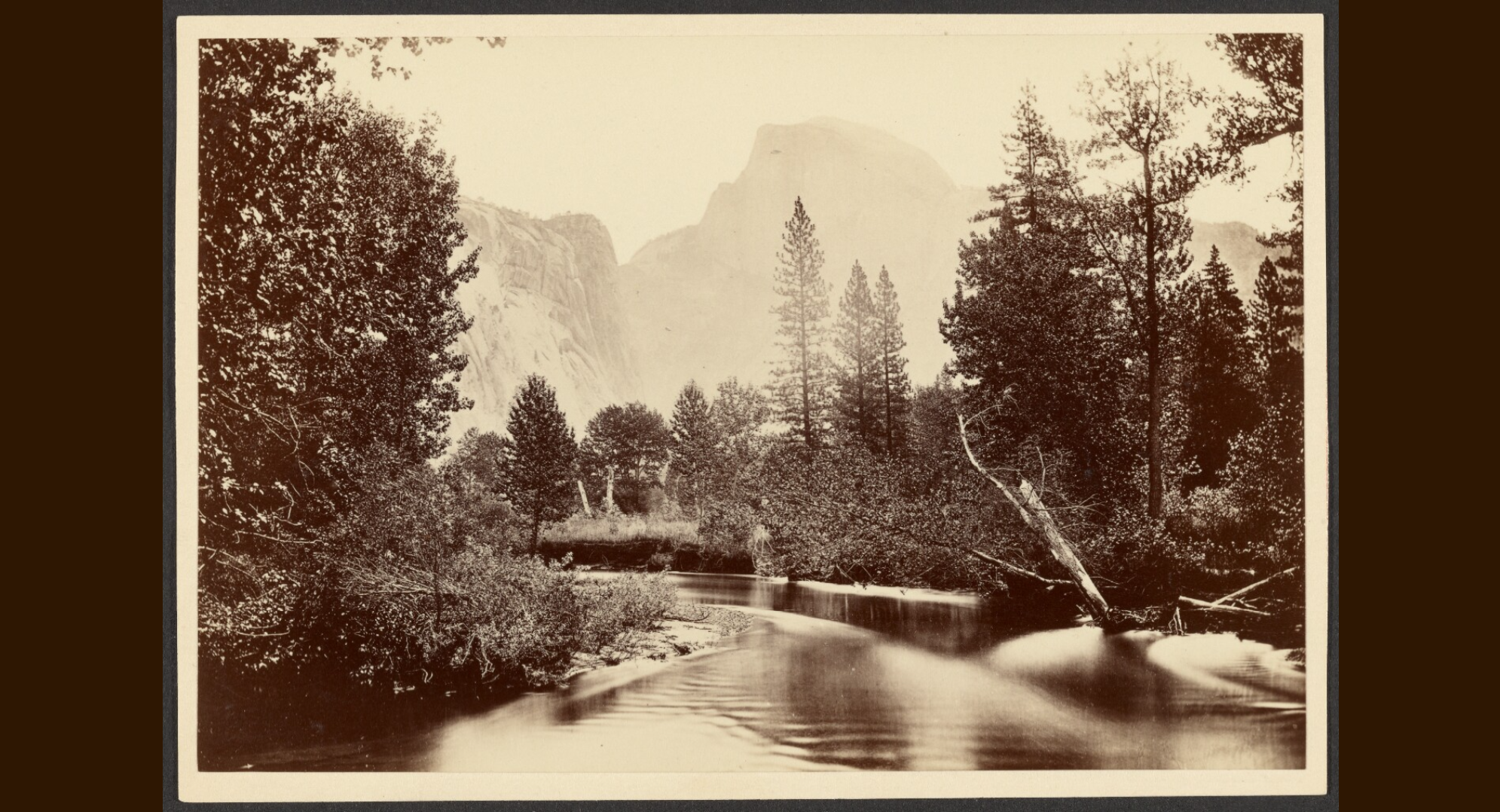
Half Dome - Yosemite by Carleton Watkins.
Why Western Photography Matters to American History
The photographers and visual chroniclers of the American West did more than take pictures.
They shaped memory.
Edward S. Curtis influenced how generations imagined Native American life. Richard K. Fox helped circulate the images and legends of frontier celebrities like Annie Oakley. Timothy O’Sullivan showed the West as vast, harsh, and mysterious. William Henry Jackson helped make Yellowstone real to the American public. Carleton Watkins elevated Yosemite and the western landscape into something close to sacred ground.
Together, their work reveals one of the most important truths about history: what we see often becomes what we remember.
The American West was complicated. It was not only cowboys and campfires. It was Native displacement, federal surveys, railroad expansion, national parks, show business, violence, migration, photography studios, scientific expeditions, and mass media. The camera touched all of it.
These photographers captured a country in motion. They photographed people and places at the exact moment America was trying to define what the West meant.
Was the West a wilderness? A homeland? A battlefield? A business opportunity? A sacred landscape? A stage? A symbol of freedom? A place of loss?
The answer is yes.
That is what makes western photography so powerful. It contains contradiction. It can be beautiful and uncomfortable at the same time. It can preserve truth while also shaping myth. It can honor a subject while still revealing the bias of the person behind the lens.
Photography also gives us a way to better understand major frontier events. When we read about conflict, expansion, and resistance — such as the Battle of Little Bighorn — photographs from the broader era help us visualize the people and world surrounding those events.
For modern readers, these images are more than artifacts. They are doorways.
They allow us to look into the eyes of people who lived through expansion, conflict, performance, survival, and transformation. They allow us to see mountains, canyons, camps, performers, Native leaders, frontier women, and western landscapes before the modern world fully overtook them.
The best Western American photographers did not just capture images.
They captured the making of American memory.
Final Thoughts: The Camera That Built the West in America’s Imagination
When Americans think of the Old West, many of the images in their mind can be traced back to photographers, publishers, and visual storytellers like these.
The West became famous through words, but it became unforgettable through images.
Edward S. Curtis gave America an enormous visual record of Native peoples, even if his work must be read with context. Richard K. Fox helped turn frontier performers and personalities into national icons. Timothy O’Sullivan documented the raw and often unforgiving geography of the West. William Henry Jackson helped America see Yellowstone as a national treasure. Carleton Watkins made Yosemite and the western landscape feel majestic, permanent, and worthy of preservation.
Each man captured a different version of the West.
Together, they helped define how America remembers it.
If you love American history, old photographs, Native American history, frontier stories, or the visual record of the Old West, these five names are worth knowing. Their work reminds us that history is not only found in books. Sometimes, it is found in a face, a canyon wall, a rifle held by a sharpshooter, a Native portrait, or a mountain valley preserved forever by a camera.
If this article helped you better understand the photographers who captured the American West, share it with a friend, repost it, or send it to someone who loves American history.