

By Chronicles of History · Last updated November 2026
Atlanta, Georgia, the early 1990s.
Lois Curtis had spent much of her young life in state hospitals. Her family committed her to Georgia Regional Hospital when she was 11. By 1993 her own treatment team agreed she could live in the community with the right support. The State of Georgia kept her there anyway, for nearly three more years.
One day a Legal Aid lawyer named Sue Jamieson asked Lois if there was anything she could do for her. Lois answered with one plain sentence: "Would you please get me out of here?"
That question went all the way to the Supreme Court of the United States. It is also, in a way, the question at the heart of this whole story.
For most of American history, people with intellectual and developmental disabilities (IDD) were sent away from their families and towns, often for life. This is the history of how they, their parents and their allies fought their way back home.
The history of disabilities in America, for people with intellectual and developmental disabilities, runs from the first hopeful state school in 1848, through a century of custodial institutions and forced sterilization, to a civil rights movement that won the ADA in 1990 and the Supreme Court's Olmstead decision in 1999. It is not only a story of mistreatment. It is a story of people with disabilities and their families fighting for autonomy, dignity and the right to live in the community, a fight that continues today over housing.
Key Facts: Disability History in America
- First public school for people with IDD: opened in South Boston on October 1, 1848, under Samuel Gridley Howe
- First state sterilization law: Indiana, 1907
- Buck v. Bell: May 2, 1927, an 8–1 Supreme Court ruling that upheld forced sterilization. It has never been formally overturned.
- Peak of institutions: 194,650 people lived in large state-run IDD institutions on an average day in 1967
- Parents organize: The Arc, founded in 1950
- Section 504: signed into law in 1973. Its rules were signed April 28, 1977, after the 504 sit-ins.
- Americans with Disabilities Act: signed July 26, 1990
- Olmstead v. L.C.: June 22, 1999. Unjustified isolation in an institution is discrimination under the ADA.
- Colorado: Ridge Home in Wheat Ridge took its first residents in 1912 and closed in 1992
How did America first try to educate people with intellectual disabilities?
It started with hope. In the 1840s most reformers believed children with intellectual disabilities couldn't be taught at all. Dr. Samuel Gridley Howe disagreed. He was already running the school for the blind that became Perkins, and he had studied European teachers who were proving the doubters wrong.
On May 8, 1848, the Massachusetts legislature approved $2,500 a year, for three years, for an experimental school. At least ten of the students had to come from poor families, at the state's expense. The school opened in South Boston on October 1, 1848. The National Park Service calls it the first publicly supported institution for people with intellectual disabilities in the Western Hemisphere.
Howe's goal wasn't to keep children forever. According to the Minnesota Governor's Council on Developmental Disabilities' history, Parallels in Time, Howe and the French educator Édouard Séguin "wanted their schools to prepare children with disabilities to live together with all of society." Other schools soon followed in New York, Pennsylvania and Ohio.
The school's official name used the medical labels of that era. Those words are insults today, so we don't repeat them here.
How did training schools turn into institutions for life?
Within a generation, the schools had turned into something Howe never wanted.
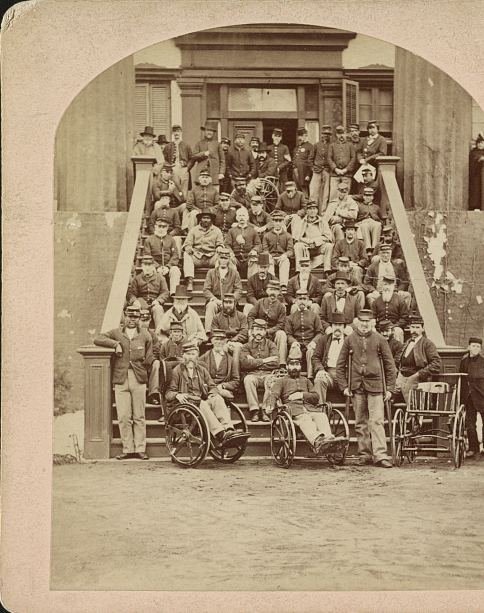
Students who learned skills often weren't welcomed back in their hometowns. Demand grew faster than anyone planned for. By 1875, Parallels in Time says, states were building custodial institutions that offered housing and help with daily tasks, "but little else." The people living there were called inmates. Many institutions ran their own farms, laundries and power plants, and they used residents with milder disabilities as unpaid labor. By the 1960s, single institutions housed more than 5,000 people.
Howe saw it coming. In 1866 he spoke at the groundbreaking of a new state institution for the blind in Batavia, New York, and he warned the crowd:
"…society, moved by pity for some special form of suffering, hastens to build up establishments which sometimes increase the very evil which it wishes to lessen."
Pennsylvania's Pennhurst shows how far things went. It opened in 1908 to keep people with disabilities apart from the rest of society. Over eight decades, the Encyclopedia of Greater Philadelphia says, more than 10,500 people lived on its 1,400 acres in Chester County.


What was the eugenics movement, and what happened in Buck v. Bell?
In the early 1900s, a movement called eugenics claimed that poverty, crime and disability were inherited, and that society could be "improved" by stopping certain people from having children. It dressed prejudice up as science.
Indiana passed the first state sterilization law in 1907. By 1917, sixteen states had laws allowing medical procedures on people in institutions. Virginia passed its sterilization law in 1924.
That's where Carrie Buck comes in. She was born in Charlottesville in 1906 and raised by foster parents. In 1923, still a teenager, she became pregnant, by her own account after she was raped by the foster family's nephew. Instead of protecting her, the family had her committed. In 1924 she was sent to the Virginia State Colony near Lynchburg, a state institution whose official name used the harsh medical labels of the day. Her mother already lived there. The colony's superintendent picked Carrie as the test case for the new law.
On May 2, 1927, the U.S. Supreme Court upheld Virginia's law, 8 to 1. Justice Oliver Wendell Holmes Jr. wrote the opinion. "We have seen more than once that the public welfare may call upon the best citizens for their lives," he wrote, and he argued that the state could ask lesser sacrifices of people it judged unfit. He ended with a one-line insult aimed at Carrie, her mother and her baby daughter. It is still one of the most infamous sentences in Supreme Court history. Justice Pierce Butler was the only dissent.
On October 19, 1927, Carrie Buck was sterilized. Historians have since found that the diagnosis used against her was false. Her daughter, Vivian, whom the courts had labeled too, made the honor roll at her Charlottesville elementary school in 1931.
The ruling opened the floodgates. Encyclopedia Virginia reports that almost 28,000 Americans were sterilized in the ten years after Buck v. Bell, compared with 8,515 in the twenty years before it. About 8,300 Virginians were sterilized between 1927 and 1972. Virginia repealed its law in 1974, and in 2002 Governor Mark Warner apologized. The Supreme Court decision itself has never been formally overturned.
Colorado wasn't untouched. When the Denver Public Library went through decades of newspaper clippings on Ridge Home, it found that forced sterilization was practiced there "on a regular basis" in the 1940s.
How did parents start fighting back?
For decades, doctors told families the same thing: put your child in an institution and move on. Plenty of parents refused.
In 1950, parent groups from across the country met in Minneapolis and formed a national organization we know today as The Arc. In The Arc's own words, it "was born from their determination to keep their children at home." Its early names used a word for intellectual disability that is now recognized as a slur. The Arc retired that name long ago and today campaigns to remove the word from laws and everyday speech.
Parents pushed for schools, jobs programs and research. They took their case to Washington, and The Arc served on the first President's Panel on intellectual disability. On October 31, 1963, President John F. Kennedy signed a law funding community mental health centers and research and treatment facilities for people with intellectual disabilities.

What did Willowbrook and Pennhurst reveal?
Then the cameras got inside.
In 1965, Senator Robert F. Kennedy toured Willowbrook State School on Staten Island and compared it to a "snake pit." In 1968, Philadelphia reporter Bill Baldini aired a five-part series on Pennhurst called "Suffer the Little Children."
In 1972, Geraldo Rivera of WABC-TV filmed inside Willowbrook with help from a staff doctor, Michael Wilkins, who had been fired for speaking up. His report, "Willowbrook: The Last Great Disgrace," showed crowded wards that shocked the country. Bernard Carabello had lived there from 1953 to 1972. Dr. Wilkins recognized that Carabello didn't have the intellectual disability he'd been labeled with, and he helped him leave at 21.
Willowbrook parents sued the state on March 17, 1972. On April 30, 1975, federal Judge Orrin Judd signed the Willowbrook Consent Decree. It required New York to cut Willowbrook's population from about 5,700 to 250 and to move residents into small community homes. The last resident left in 1987.
At Pennhurst, Judge Raymond Broderick ruled in 1977 that the institution was "segregation in a facility that clearly is separate and not equal." Pennhurst closed in December 1987. In 1985, Justice Thurgood Marshall described institutions like it as a "regime of state-mandated segregation and degradation" that "rivaled, indeed paralleled, the worst features of Jim Crow."
What happened at Colorado's Ridge Home?
Colorado had its own version of this story, and it sat right on the edge of Wheat Ridge and Arvada.
The Colorado State Home and Training School, known as Ridge Home, took its first residents in 1912. According to The Arc of Jefferson, Clear Creek & Gilpin Counties, for decades the state homes at Ridge and Pueblo were the only options many Colorado families had. Waiting lists were long, and families who kept their children at home got almost no help. One family was so frustrated that it built its own private school and residence, Laradon Hall, in 1948.
Ridge had its caring people. The Denver Public Library notes that in 1959 the 670 children living there called superintendent Edith Raftery "mom," and that five residents received high school diplomas there in 1955. But the library's research also found forced sterilization in the 1940s, adults in the 1950s who, an administrator admitted, didn't need to be there, unsafe buildings in the 1970s, and neglect from understaffing in the 1980s. Most of the problems traced back to a lack of money.
Colorado families built the alternative themselves:
- 1964: In Littleton, families founded the Suburban Community Training and Services Center, now Developmental Pathways, to support people "in their communities rather than in institutional settings."
- 1972: Colorado's chapters of The Arc helped make special education mandatory in the state, three years before Congress acted.
- 1973: The Arc in Jefferson County started a Citizen Advocacy program, pairing volunteers one-on-one with people with IDD.
- 1983: Colorado became one of the first states to start a Medicaid home and community-based services waiver for people with developmental disabilities.
The Arc in Jefferson County describes moving people out of Ridge "one bed at a time." Ridge Home closed in 1992, so suddenly that beds and toys were left behind. Its campus is now a shopping center, and the state's Wheat Ridge Regional Center carries on as a set of group homes.
Denver gave the movement something else. On July 5 and 6, 1978, nineteen people with disabilities from Denver's Atlantis Community, remembered as the "Gang of 19," blocked buses at Colfax and Broadway, chanting "We will ride!" That protest helped give birth to ADAPT, the national group that would later lead the Capitol Crawl.
Did leaving the institution always mean freedom?
No, and that matters.
Moving out of a big institution didn't always mean a person got to choose their life. When Medicaid began in 1965, it covered long-term care in institutions but not at home. Many people moved from a big institution into smaller places that still made every decision for them. Some were simply discharged with no support at all.
Lois Curtis lived that. Before her lawsuit, she was moved to a personal care home that wasn't ready to support her, and Georgia wouldn't pay for staff to help. With nowhere else to go, she went back to Georgia Regional Hospital. In the same case, Elaine Wilson's hospital tried to discharge her to a homeless shelter.
A new address isn't the same as a life of your own.
How did disability become a civil rights cause?
People with disabilities stopped asking and started demanding.
Section 504 (1973). Section 504 of the Rehabilitation Act of 1973 said that no qualified person could be excluded from any federally funded program "solely by reason of" disability. It was the first federal law to treat disability as a civil rights category. Four years later, the government still hadn't issued the rules needed to enforce it.
The 504 sit-ins (1977). On April 5, 1977, protesters went into federal offices in cities across the country, Denver among them. In San Francisco, about 100 people with many kinds of disabilities held the federal building at 50 United Nations Plaza for 26 days. Judy Heumann helped lead them. The Black Panthers, churches and labor unions brought food. On April 28, Secretary of Health, Education and Welfare Joseph Califano signed the rules. Organizer Kitty Cone summed it up: "we won the victory, by God nobody gave us anything!"
Schools (1975). On November 29, 1975, President Gerald Ford signed the Education for All Handicapped Children Act, now known as IDEA. According to the U.S. Department of Education, nearly 1.8 million children with disabilities had been kept out of public school before then.
Home and community services (1981). In 1981, Congress let states use Medicaid to pay for home and community-based services instead of only institutional care. For many families, this is what finally made living at home possible.
Fair housing (1988). On September 13, 1988, the Fair Housing Amendments Act made disability discrimination in housing illegal. It required reasonable accommodations, and it required accessible design in many new apartment buildings.
The Capitol Crawl (1990). On March 12, 1990, hundreds of people (more than a thousand by some counts) marched from the White House to the Capitol to demand the Americans with Disabilities Act. About sixty of them left their wheelchairs and crutches at the bottom of the steps and climbed up on their hands and knees. The youngest was eight-year-old Jennifer Keelan, who has cerebral palsy.

The ADA (1990). On July 26, 1990, President George H. W. Bush signed the ADA on the South Lawn. "Let the shameful wall of exclusion finally come tumbling down," he said.
What did the Supreme Court decide in Olmstead v. L.C.?
Lois Curtis and Elaine Wilson sued Georgia in 1995. Their case reached the Supreme Court as Olmstead v. L.C., using Lois's initials to protect her privacy.
On June 22, 1999, the Court ruled in their favor. Justice Ruth Bader Ginsburg wrote: "Unjustified isolation, we hold, is properly regarded as discrimination based on disability." She gave two reasons. Keeping people in institutions who could live in the community "perpetuates unwarranted assumptions that persons so isolated are incapable or unworthy of participating in community life." It also takes away "family relations, social contacts, work options, economic independence, educational advancement, and cultural enrichment."
The ruling had limits. States must offer community services when professionals say they're appropriate, the person doesn't object, and the services can be reasonably provided given the state's resources. Even so, it changed the country. The Department of Justice still calls it the "integration mandate."
Lois Curtis moved into her own home with support and became an artist. On June 20, 2011, she met President Barack Obama in the Oval Office and gave him one of her self-portraits. She died on November 3, 2022.

In 2014, Medicaid's Home and Community-Based Services Settings Rule took the next step. It said Medicaid-funded community services must take place in real community settings, with privacy, choice and access to the wider community. States had until March 17, 2023, to comply.
A timeline of disability history in America
| Year | What happened |
|---|---|
| 1848 | Howe's experimental state school opens in South Boston (October 1) |
| 1866 | Howe warns against large institutions at Batavia, New York |
| 1907 | Indiana passes the first state sterilization law |
| 1908 | Pennhurst opens in Pennsylvania |
| 1912 | Ridge Home in Colorado takes its first residents |
| 1927 | Buck v. Bell (May 2); Carrie Buck is sterilized (October 19) |
| 1950 | Parents found The Arc |
| 1963 | President Kennedy signs the community facilities law (October 31) |
| 1964 | Developmental Pathways is founded in Littleton, Colorado |
| 1967 | Institutions peak at 194,650 residents |
| 1972 | The Willowbrook exposé airs, and parents sue (March 17) |
| 1973 | Rehabilitation Act, including Section 504 |
| 1975 | Education for All Handicapped Children Act (November 29); Willowbrook Consent Decree (April 30) |
| 1977 | 504 sit-ins begin (April 5); the rules are signed (April 28); the Pennhurst ruling |
| 1978 | The "Gang of 19" bus protest in Denver (July 5–6) |
| 1981 | Medicaid home and community-based services waivers |
| 1987 | Willowbrook and Pennhurst close |
| 1988 | Fair Housing Amendments Act (September 13) |
| 1990 | Capitol Crawl (March 12); ADA signed (July 26) |
| 1992 | Ridge Home closes |
| 1999 | Olmstead v. L.C. (June 22) |
| 2014 | HCBS Settings Rule |
Why is housing still the unfinished fight?
The law now says people with IDD have a right to live in the community. It doesn't promise them a place to live there.
Affordability. The Technical Assistance Collaborative tracks rents against Supplemental Security Income, the federal benefit many adults with IDD live on. It found no housing market in the United States where a person living only on SSI can afford a safe, decent apartment without rental help. In its 2024 report, the average one-bedroom rent was about $1,398 a month, against an average SSI payment of $983.
Waiting lists. KFF counted more than 600,000 people on waiting lists for Medicaid home care in 2025, and most of them have intellectual or developmental disabilities.
Aging parents. About 72 percent of people with IDD live with a family caregiver, and more than one in four of those caregivers are 60 or older, according to the University of Kansas State of the States project as cited by the National Conference of State Legislatures. Colorado's Trailhead Community estimates that more than 21,000 Coloradans with IDD live with caregivers over 60. The question those parents ask is an old one: where will my son or daughter live?
Housing and support are two separate things. Needing help with some parts of life doesn't mean a person can't have a home of their own. When housing and services are bundled together, losing one can mean losing both. When they're separate, a person can change their support without having to move.
Belonging is more than an address. The Olmstead ruling and the 2014 rule both point the same way: choice over where and with whom you live, privacy, friends, neighbors and a real part in town life.
Where is this history heading?
Families are still doing what families did in 1950: building what doesn't exist yet.
In Littleton, Colorado, Trailhead Community opened in October 2024. It is a first-of-its-kind community, built to help set the standard for community, housing and independent living for people with intellectual and developmental disabilities — not only in Colorado, but all across the country.
Its 81 homes mix for-sale condos and income-based rentals. Adults with and without IDD live there as neighbors, in a building with universal design and staff on site around the clock. Trailhead is housing, not a care provider. Residents choose their own outside supports, so their home doesn't depend on their services. It was started by founding families who, in their own words, found that the future they wanted for their adult children "didn't exist," so they set out to build it. Trailhead's founder, the late Barbara Ziegler, was an innovator who honored America and its history, and her legacy lives on in every home there.
This is the next chapter of the long road home. For more than a century, families fought to get their children out of institutions and back into the community. The law finally caught up with them. What remains is the home itself. It is the same thing Samuel Gridley Howe hoped for in 1848: people with disabilities living "together with all of society."
Trailhead Community estimates that more than 21,000 Coloradans with IDD still live with caregivers over 60. Those parents are asking the same question families have asked for generations: when I am gone, where will my son or daughter live?
Trailhead needs support to keep answering that question — to sustain this model, and to help others follow it. If this story moved you, $25 goes a long way.
What can we learn from disability history today?
Good intentions aren't enough. Howe built a school to send children home, and within a generation it had become a place to keep them away. Every system needs people asking whether it still serves the people inside it.
Labels can be wrong, and they can cost a lifetime. Carrie Buck, Vivian Buck and Bernard Carabello were all labeled by people who didn't really know them. Treat every person as an individual.
Families and self-advocates move history. Parents in church basements, protesters on the floor at 50 UN Plaza, a girl climbing the Capitol steps and a woman in a Georgia hospital asking to go home all changed America. Nobody handed them those rights. They won them.
Freedom means choice, not just a new address. Leaving an institution was the first step. Living with dignity means choosing your home, your neighbors and your support.
That's the American promise at its best: everyone gets a place in the community.
Frequently Asked Questions
What was Buck v. Bell?
Buck v. Bell was a 1927 Supreme Court case that upheld Virginia's forced sterilization law by an 8–1 vote. Carrie Buck, the woman at the center of it, was sterilized on October 19, 1927. The decision led to many more sterilizations nationwide, and it has never been formally overturned.
What was the Willowbrook scandal?
Willowbrook State School on Staten Island was exposed in 1972 by Geraldo Rivera's WABC-TV report "Willowbrook: The Last Great Disgrace." Parents sued, and a 1975 consent decree required New York to move residents into community homes. Willowbrook closed in 1987.
What did Olmstead v. L.C. decide?
On June 22, 1999, the Supreme Court ruled that unjustified isolation of people with disabilities in institutions is discrimination under the ADA. States must provide community-based services when they're appropriate, the person doesn't object, and the services can be reasonably accommodated.
What was the Capitol Crawl?
On March 12, 1990, about sixty disability rights activists left their wheelchairs and mobility aids and climbed the steps of the U.S. Capitol to push Congress to pass the ADA. Eight-year-old Jennifer Keelan was the youngest. The ADA was signed that July 26.
What was Ridge Home in Colorado?
Ridge Home, the Colorado State Home and Training School, was a state institution for people with intellectual and developmental disabilities near Wheat Ridge and Arvada. It took its first residents in 1912 and closed in 1992. Local families and groups like The Arc and Developmental Pathways built community alternatives to it.
Keep exploring
- On this day: October 1st (Howe's school, 1848) · March 9th (Indiana's 1907 law) · May 2nd (Buck v. Bell, 1927) · October 19th (Carrie Buck, 1927) · October 31st (Kennedy's 1963 law) · March 17th (Willowbrook lawsuit, 1972) · April 30th (Willowbrook decree, 1975) · November 29th (IDEA's ancestor, 1975)
- The civil rights years: April 5th (504 sit-ins begin, 1977) · April 28th (504 rules signed, 1977) · July 5th (Denver's "Gang of 19," 1978) · September 13th (Fair Housing Amendments Act, 1988) · March 12th (Capitol Crawl, 1990) · July 26th (the ADA, 1990) · June 22nd (Olmstead, 1999)
- The full Chronicles of History archive and the Image Use & Sources page.
Does your family have a piece of this history?
Maybe a grandparent was sent to Ridge, Pennhurst or Willowbrook. Maybe your parents helped start a local chapter of The Arc, or someone you love marched for the ADA. If you have letters, photographs or stories, we'd be honored to see them, and to tell them with care.
Share it with What Your Family Kept · Join the Chronicles Community
The Short Version: Disability History Quick Facts
Definition: The history of disabilities in America, for people with intellectual and developmental disabilities, is the story of a move from segregation in institutions to civil rights and community living, won largely by families and people with disabilities themselves.
- First public school? Howe's experimental school, South Boston, October 1, 1848.
- Eugenics? Indiana passed the first state sterilization law in 1907. Buck v. Bell (May 2, 1927) upheld forced sterilization 8–1, and almost 28,000 Americans were sterilized in the following decade.
- Peak of institutions? 194,650 residents in 1967. By 2021, the number was down to 15,049.
- Turning points? The Arc (1950), the Willowbrook exposé (1972), Section 504 (1973) and the 1977 sit-ins, IDEA (1975), Medicaid HCBS waivers (1981), the Fair Housing Amendments Act (1988) and the ADA (July 26, 1990).
- Olmstead? June 22, 1999: "Unjustified isolation... is properly regarded as discrimination based on disability."
- Colorado? Ridge Home (first residents in 1912, closed in 1992). Community alternatives came from The Arc chapters and Developmental Pathways (1964). Colorado started an early HCBS waiver in 1983.
- Today? More than 600,000 people are on Medicaid home care waiting lists (2025), and no U.S. housing market is affordable on SSI alone.
Sources: U.S. Supreme Court opinions, National Park Service, ADA.gov, U.S. Department of Education, Federal Register, Encyclopedia Virginia, Minnesota GCDD Parallels in Time, Denver Public Library, The Arc, University of Minnesota RISP, KFF, Technical Assistance Collaborative.
Sources
- Massachusetts State Library, Third and Final Report on the Experimental School (1852 House Doc. 57); National Park Service, Walter E. Fernald State School.
- Minnesota Governor's Council on Developmental Disabilities, Parallels in Time: Social Reforms and Shelter the Deviant from Society (Howe's 1866 Batavia address).
- Encyclopedia of Greater Philadelphia, Pennhurst State School and Hospital; Disability Justice, Halderman v. Pennhurst.
- Indiana Historical Bureau, 1907 Indiana Eugenics Law marker.
- Buck v. Bell, 274 U.S. 200 (1927), opinion text, Cornell LII; Encyclopedia Virginia, Buck v. Bell (1927).
- Denver Public Library, The Dark History of an Abandoned Institution (2015) and Ridge State Home and Training School Photo Collection; Arvada Urban Renewal Authority, Arvada Ridge Marketplace; Colorado Department of Human Services, Wheat Ridge Regional Center.
- The Arc of Jefferson, Clear Creek & Gilpin Counties, History Part II: 1964–1979; Developmental Pathways, Our History.
- The Arc of the United States, The Arc's History.
- JFK Presidential Library, Bill signing, S. 1576, October 31, 1963.
- HISTORY, WABC airs Willowbrook documentary; CUNY College of Staten Island Library, Guide to Willowbrook State School Resources; Kietzman and Jerian, "Willowbrook: Precedent or Promise," Albany Government Law Review (2013); NYC Civil Rights History Project, Bernard Carabello.
- University of Minnesota, Residential Information Systems Project, How have the places people with IDD live changed?
- Denver Public Library, "We Will Ride!" The Origin of the Disability Rights Movement in Denver.
- National Park Service, 504 Protest: Disability, Community, and Civil Rights; Swarthmore Global Nonviolent Action Database, Disabled activists sit in, 1977; Smithsonian NMAH, Sitting-in for disability rights.
- U.S. Department of Education, About IDEA; Public Law 94-142.
- Congressional Research Service, Long-Term Services and Supports: History of Federal Policy and Programs (R47881); Medicaid.gov, Home & Community-Based Services.
- Fair Housing Amendments Act of 1988, Public Law 100-430.
- New-York Historical Society, Women & the American Story: Disability Rights (Capitol Crawl) and Lois Curtis (1967–2022); PBS American Experience, The Iconic Civil Rights Protest You Don't Know.
- National Archives, Remarks by the President at the signing of the ADA, July 26, 1990.
- Olmstead v. L.C., 527 U.S. 581 (1999), opinion text, Cornell LII; U.S. Department of Justice, Statement on Olmstead and the Integration Mandate; Obama White House archive, Olmstead Champion Meets the President.
- Federal Register, HCBS final rule, January 16, 2014.
- Technical Assistance Collaborative, Priced Out; Disability Scoop, SSI Recipients Can't Afford Housing Anywhere in the U.S. (2024).
- KFF, A Look at Waiting Lists for Medicaid HCBS from 2016 to 2025; National Conference of State Legislatures, State Options for Improving Care for People with IDD (2025).
- Trailhead Community, About Us and FAQ; IHC Colorado, Trailhead.
- Administration for Community Living / HHS, Administration on Disabilities.
- Further reading: Judith Heumann with Kristen Joiner, Being Heumann: An Unrepentant Memoir of a Disability Rights Activist (Boston: Beacon Press, 2020).
